

How Human Relationships Define Leader Success
As organizations accelerate AI adoption, leaders are navigating more than technological transformation — they are reshaping how people connect, collaborate, and lead. While AI promises greater speed and efficiency, it also risks weakening human relationships that enable effective leadership, innovation, and organizational resilience.
Drawing on our latest research, The Space Between People, this human relationships webinar explores how leaders can balance AI-enabled transformation with the human capabilities that drive direction, alignment, and commitment. Participants will gain practical insights into strengthening leadership infrastructure that preserves connection while enabling organizations to thrive in an AI-powered future.
What You’ll Learn
Understand how AI and other compounding forces are reshaping the social process of leadership and influencing how leaders connect, collaborate, and make decisions
Explore the organizational risks of weakening human connection — from fragmented sensemaking and reduced collaboration to declining resilience and belonging
Learn how leaders can intentionally build leadership practices and organizational infrastructure that strengthen relationships while accelerating AI-enabled transformation
Register here for this free online event. Please note, this event has been standardized to the Eastern Time Zone.
Humans Wanted: The Great Rehiring
Some companies rushed to cut jobs, convinced AI could absorb the work. Now many are hiring people back. What changed?
As organizations move beyond the first wave of AI adoption, they're discovering that productivity, judgment, trust, and accountability don't always automate easily.
Join our experts as they build on Korn Ferry’s Briefings cover story, “Help Wanted: Humans?”
We'll explore what's causing this unusual reversal in strategy and, more importantly, whether this new appreciation of human contribution will last.
We’ll cover:
The difference between automating tasks and eliminating jobs
How to avoid costly workforce decisions as AI continues to evolve
How leaders can redesign work and organizations for a Human + AI future
Register here for this free online event. Please note, this event has been standardized to the Eastern Time Zone.
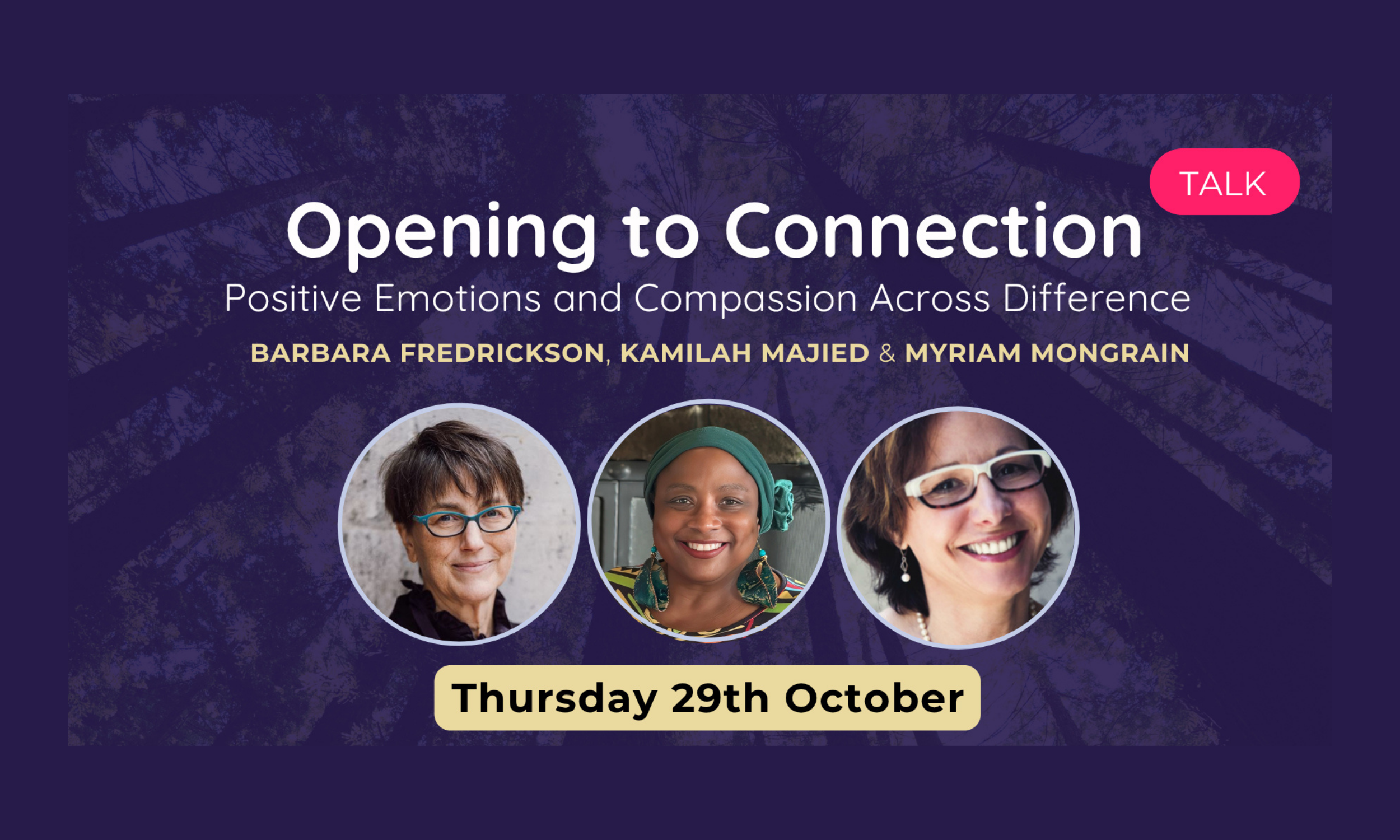
Opening to Connection - Positive Emotions and Compassion Across Difference
How do we keep our hearts open when our differences make us want to pull away? Leading researchers and clinicians Barbara Fredrickson, Kamilah Majied, and Myriam Mongrain will examine how everyday moments of joy, love, and contemplative practice can disarm defensive habits, restore compassion, and build the enduring psychological resources needed to heal deep societal divides.
What We’ll Explore
Through dialogue and practical insights, we will explore how to:
Move Past Division: What helps us step out of “us vs. them” habits and reconnect across difference.
Build Inner Resilience: How contemplative practices bring grounding and courage during social friction.
Open the Heart: How micro-moments of joy and curiosity replenish our emotional capacity when we feel closed off.
Explore Wider Possibilities: Ideas for both personal and collective changes that support everyday compassion.
Our Expert Speakers
Kamilah Majied, MSW, PhD is a mental health therapist, clinical educator, researcher, and internationally engaged consultant on building inclusivity and equity using meditative practices. Drawing from her decades of contemplative practice and leadership, Dr. Majied engages people in experiencing wonder, humor, and insight through transforming oppressive patterns and deepening relationships toward ever-improving individual, organizational and communal wellness. As Professor of Social Work at California State University, Monterey Bay, she teaches clinical practice to graduate students employing psychodynamic, cognitive-behavioral, mindfulness-based, and artistic approaches to well-being. She is the author of Joyfully Just: Black Wisdom and Buddhist Insights for Liberated Living (Sounds True).
Barbara Fredrickson, PhD is Kenan Distinguished Professor of Psychology and Neuroscience at the University of North Carolina at Chapel Hill (https://peplab.web.unc.edu/). She is most known for her Broaden-and-Build Theory of positive emotions, foundational in both affective science and positive psychology. Having published 175 peer-reviewed articles, she is among the top 0.05% of scholars in terms of career-long productivity and impact. A recipient of numerous awards for her research and teaching, Dr. Fredrickson has authored three books, Positive Emotions (Oxford University Press), Love 2.0, (PositivityResonance.com), and Positivity (PositivityRatio.com). Her free online course on the Coursera platform has reached >370,000 learners worldwide.
Dr. Myriam Mongrain is a clinical psychologist and Full Professor of Psychology at York University. She is an active clinician, researcher, and teacher whose work examines positive psychology interventions to boost resilience and promote well-being. She currently serves as Chair of the Science Committee for the Global Compassion Coalition.
Register here for this free online event. Please note, this event has been standardized to the Eastern Time Zone.
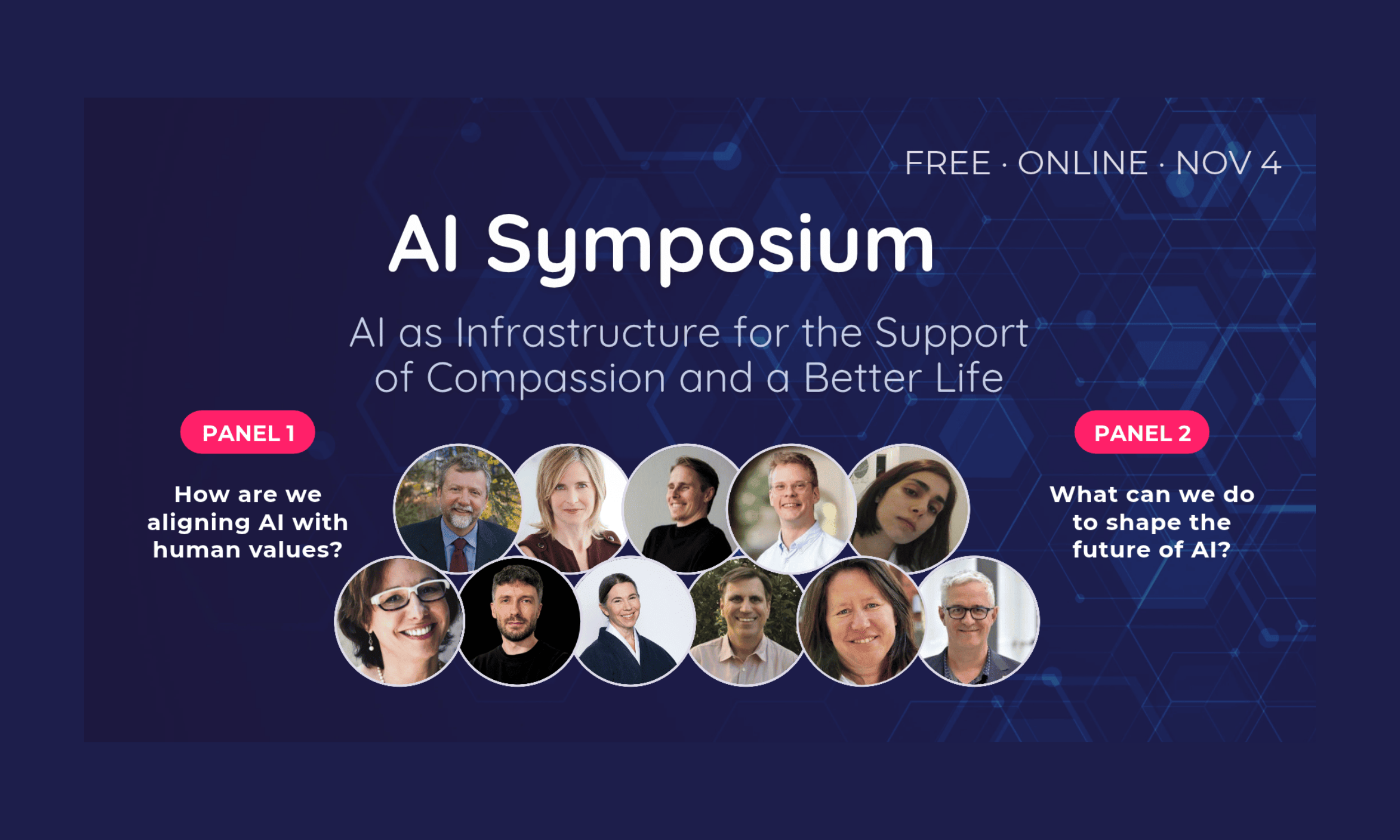
AI Symposium - AI as Infrastructure for the Support of Compassion and a Better Life
JOIN US FOR AN EXPLORATION OF HOW AI CAN SUPPORT HUMAN FLOURISHING
AI is rapidly changing how we live, work, learn, and connect.
The choices we make now will help determine whether it deepens division— or supports compassion, fairness, dignity, and collective wellbeing.
Join us for a free, accessible symposium exploring how we can guide AI toward a more humane future.
Why This Matters Now
AI is already influencing the information we receive, the decisions institutions make, how we learn, and how we relate to one another. Its development is moving quickly, and many of us are asking what it will mean for our relationships, communities, work, and society. How can AI strengthen what is best in us?
Symposium Host
As Chair of the Global Compassion Coalition’s Science Committee, Dr. Myriam Mongrain has played a key role in shaping the symposium and bringing together its speakers. A clinical psychologist and Full Professor of Psychology at York University, Myriam is an active clinician, researcher and teacher whose work examines positive psychology interventions to boost resilience and promote well-being.
This Symposium Is for You If...
You’re curious about AI and what its rapid development means for human life and the kind of society we want to create.
Whether you work in technology, research, education, policy, philanthropy, or civil society, or simply want to better understand AI’s impact on our shared future, you are warmly invited to join us.
No technical background is required, only curiosity and care for the future we are creating together.
What You'll Learn
What’s happening now - How AI is being aligned with prosocial values.
The opportunities and challenges - Bringing human values into AI development and governance.
How we can shape its direction - The role people and organisations can play.
A more compassionate future - Practical possibilities that support human flourishing.
Register here for this free online event. Please note, this event has been standardized to the Eastern Time Zone.
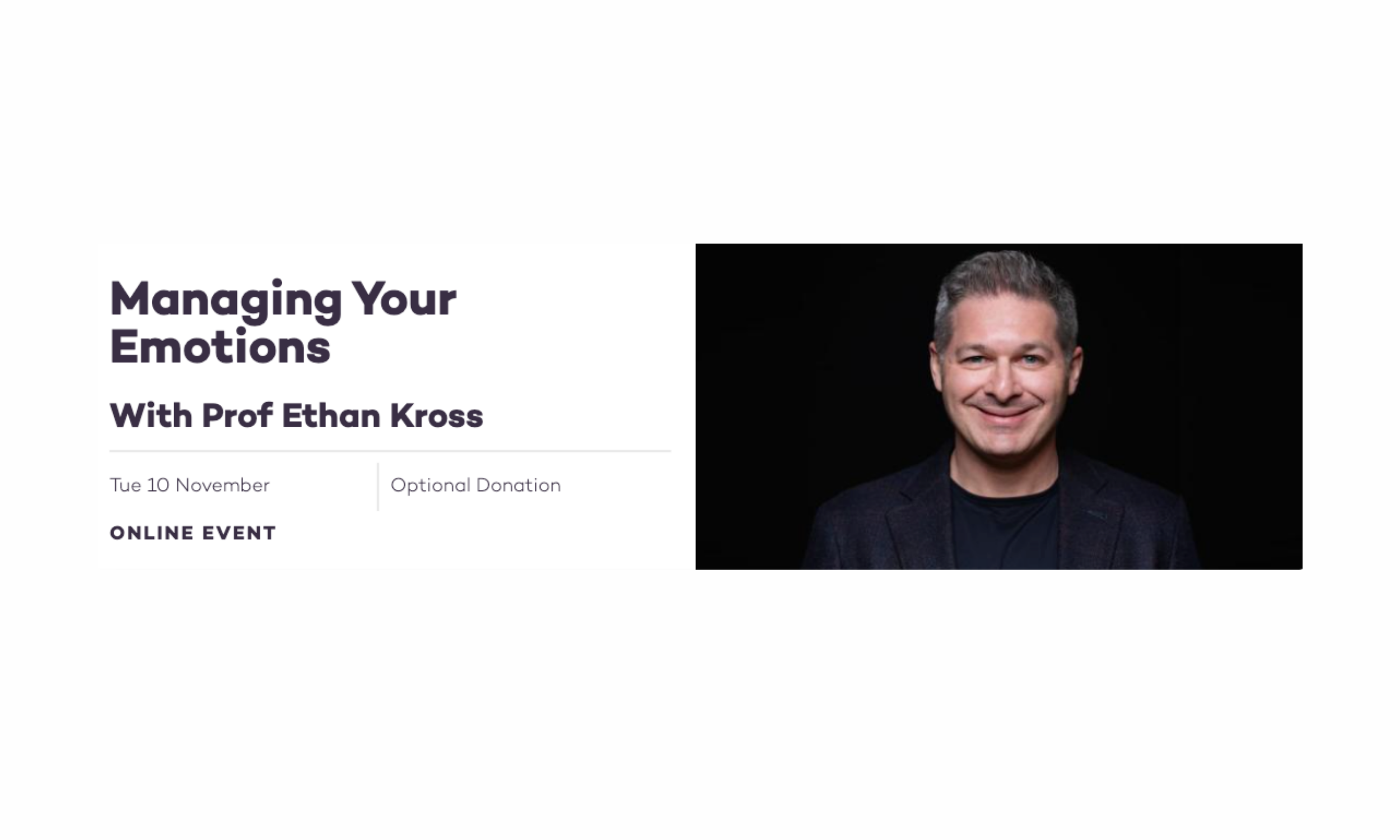
Managing Your Emotions with Prof Ethan Kross
Who’s in charge: you or your emotions?
We can’t stop difficult feelings from arriving - frustration, worry, anger and sadness are all part of being human. However, although we can't choose what we feel, we have more control than we realise over what happens next.
At this special event, leading emotion scientist Professor Ethan Kross will share insights from his bestselling book Shift. He’ll explore why some of the most powerful ways to change how we feel are outside our heads, and why building your toolkit in the calmer times means you’re ready when the storm hits.
Ethan will guide us through some of his favourite tools. These include coaching yourself through tough moments with distanced self-talk, finding the sights, sounds and tastes that reliably lift your mood, and working out who to turn to when you’re struggling. Whether you’re going through something big, or just the ups and downs of everyday life, this event will leave you with simple, science-backed tools you can use straight away.
About the speaker?
Ethan Kross is one of the world’s leading experts on emotion regulation. He is a professor at the University of Michigan, in both the Department of Psychology and the Ross School of Business, where he founded and directs the Emotion & Self-Control Laboratory. His research looks at how the conversations we have with ourselves shape our health, performance, decisions and relationships. It has been published in leading journals including Science and the New England Journal of Medicine.
Ethan is the two-time national bestselling author of Chatter and Shift, which have been translated into over 40 languages. His work has featured in The New York Times, The Wall Street Journal, The Atlantic and Harvard Business Review, and on CBS, Good Morning America and NPR. He has also taken part in policy discussions at the White House.
Register here for this free online event. Please note, this event has been standardized to the Eastern Time Zone.
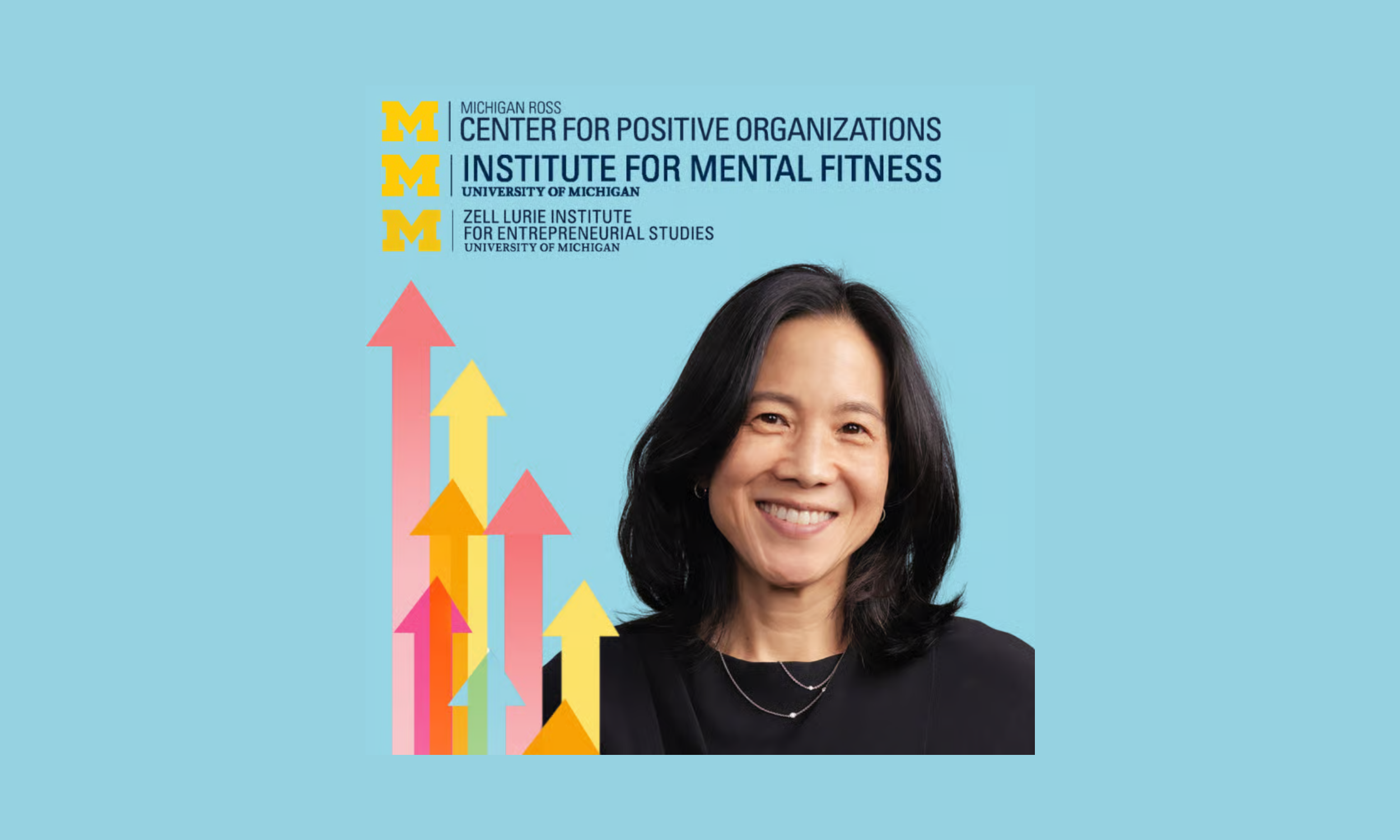
Angela Duckworth – Situated
What brings out your best? Science has a lot to say about that question — and Angela Duckworth has spent her career finding the answers.
The University of Michigan Institute for Mental Fitness invites you to a virtual fireside chat on Tuesday, November 11 at 5:30 PM ET featuring Angela Duckworth, #1 New York Times bestselling author of Grit and Rosa Lee and Egbert Chang Professor of Psychology at the University of Pennsylvania, in conversation with IMF Executive Director and Michigan faculty member Ethan Kross. The discussion centers on Angela’s new book, Situated: Find the People and Places that Bring Out Your Best — an exploration of how context, community, and environment are as fundamental to human performance as talent or effort.
Mental fitness doesn’t happen in isolation. Neither does this conversation.
Event Co-Sponsors
Institute for Mental Fitness
Zell Lurie Institute for Entrepreneurship
Center for Positive Organizations
Register here for this free online event. Please note, this event has been standardized to the Eastern Time Zone.
Compassionate Communication Virtual Workshop Series: Compassionate Conversations, Positive Cultures: A Collaborative Approach to Professionalism and Civility in Medicine
Communication shapes every interaction in healthcare. Build the skills to make each one count.
Unprofessional and uncivil behaviors can quietly erode trust, psychological safety, and collaboration across healthcare organizations. While traditional mechanisms such as peer review and human resources processes play an important role, they are not always designed to address the nuanced, recurring concerns that influence culture over time. This session will highlight the University of Kentucky College of Medicine’s Professionalism and Civility Panel (ProCP), a collaborative partnership among faculty affairs, organizational well-being, and human resources that uses compassionate communication to support learning, accountability, and organizational improvement. Attendees will learn how a coordinated, relationship-centered approach to professionalism can strengthen trust, foster positive workplace cultures, and create opportunities for lasting culture change.
UC San Diego's Center for Compassionate Communication invites you to the Fall 2026 Compassionate Communication Virtual Workshop Series. Designed for healthcare professionals, healthcare educators, medical students, and beyond, this free, interactive series equips participants with practical communication skills to strengthen relationships, navigate difficult conversations, and foster more compassionate, effective interactions with patients, colleagues, learners, and teams.
Register here for this free online event. Please note, this event has been standardized to the Eastern Time Zone.
Adderley Positive Research Incubator: How Workers Become Captivated by an Imagined Future with Preeti Varma
In an ethnographic study of employees at Multivex (MV), an AI development company building frontier multimodal AI models, I present a theoretical model describing the social construction of aspirational intoxication, defined as a state of captivation with an imagined future. I find that workers confront a tension arising from the simultaneous promise and threat of advanced AI to society’s future—a tension amplified by accelerating technological capabilities and nested competitive races. This tension generates an intractable anxiety (moral, existential, and competitive) about the future. Rather than avoiding or accepting this anxiety, workers engage in three cognitive processes—intellectualizing narratives, abstracting identity, and gamifying reality—that transform anxiety into fascination, significance, and thrill. This study helps explain how workers become increasingly invested in realizing transformative technological futures, and how such investment reinforces the competitive dynamics that accelerate their development and sustain technological progress.
Seed Generators:
Aruna Ranganathan, University of California, Berkeley
Batia Weisenfeld, New York University
Incubator Hosts:
Jane Dutton, University of Michigan
Jordan Nye, University of Michigan
The Center for Positive Organizations Adderley Positive Research Incubators invite emerging scholars to share new work or work in progress related to the broad domain of Positive Organizational Scholarship, supported by a community dedicated to helping them foster early ideas, generate insights, and see new possibilities for their core ideas. Incubators are an exciting forum for the growth, celebration, and expansion of research ideas aimed at fostering our understanding of the science of thriving organizations.
Register here for this free online event. Please note, this event has been standardized to the Eastern Time Zone.
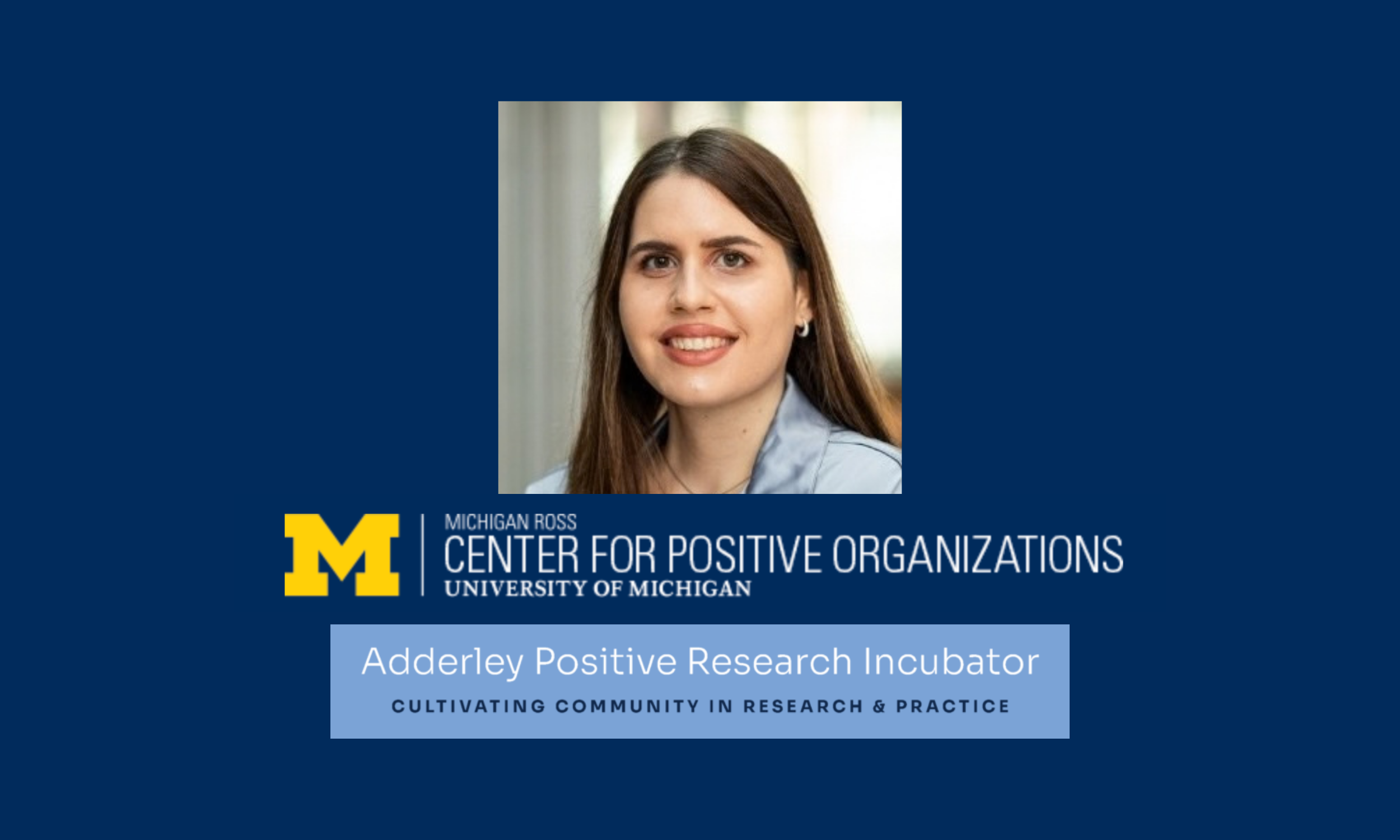
Adderley Positive Research Incubator: A Clown Car of One’s Own - How Women Creatives Cultivate Space for Creative Work through Generative Reclamation with Martina Pizzinato
Women in male-dominated occupations often face barriers to expressing aspects of their self at work, as the self is often marginalized and they are encouraged to conceal it. This may be particularly consequential in creative work, where self-expression is central, and pressures to suppress the self may directly undermine the very basis on which such work relies. As a result, women engaged in creative work may experience a tension between the expressive demands of their work and workplace contexts that marginalize the expression of their self. In this paper, I thus examine how women engaged in creative work achieve self-expression when the self is marginalized. Drawing on an inductive, qualitative study of women in the stand-up comedy industry, I identify generative reclamation – the process through which women embrace and amplify experiences of marginalization, as well as marginalized aspects of the self, through their creative work. Through this process, women come to view their marginality not as a constraint but as a generative force that enriches and transforms their creative work. This study advances literature by showing how and when women achieve self-expression through the affirmation of a marginalized self and by introducing a novel creative process that shapes how they ascribe meaning to their creative work.
Seed Generators:
Stephanie Creary, The University of Pennsylvania
Julia DiBenigno, Yale University
Incubator Hosts:
Jane Dutton, University of Michigan
Jordan Nye, University of Michigan
The Center for Positive Organizations Adderley Positive Research Incubators invite emerging scholars to share new work or work in progress related to the broad domain of Positive Organizational Scholarship, supported by a community dedicated to helping them foster early ideas, generate insights, and see new possibilities for their core ideas. Incubators are an exciting forum for the growth, celebration, and expansion of research ideas aimed at fostering our understanding of the science of thriving organizations.
Register here for this free online event. Please note, this event has been standardized to the Eastern Time Zone.
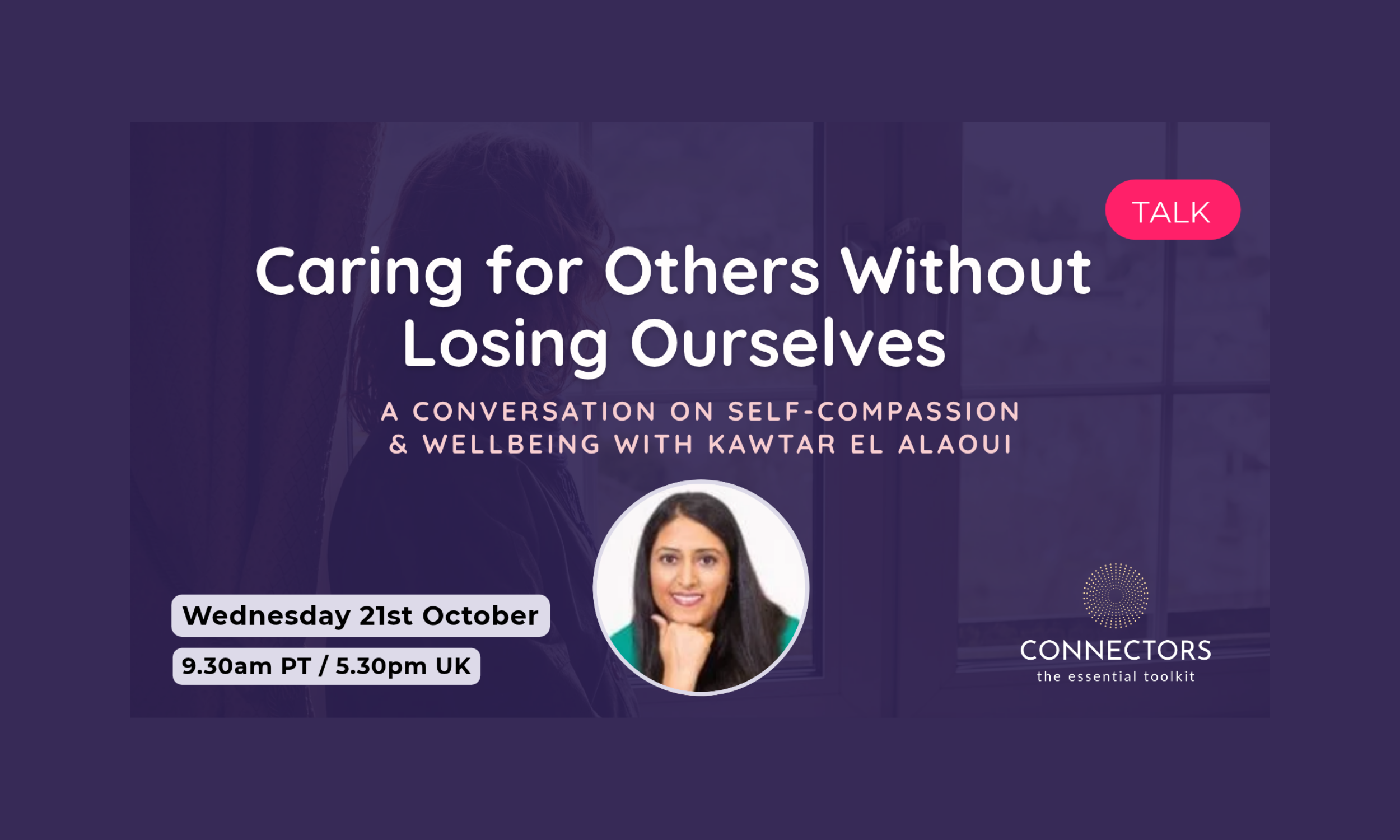
Caring for Others Without Losing Ourselves: A conversation on Self-Compassion & Wellbeing with Kawtar El Alaoui
Caring for others shouldn’t mean losing ourselves in the process. Join Kawtar El Alaoui for a practical exploration of the science of self-compassion, and discover how caring for ourselves can help us stay grounded, resilient and able to sustain our care for others.
When we’re committed to making a difference in our communities, it’s easy to put our own needs last. We give our time, energy and attention to others, often carrying the emotional weight of the challenges we encounter along the way. But how can we continue showing up for others without exhausting ourselves in the process?
In this interactive session, Kawtar El Alaoui will explore the science of self-compassion and why caring for ourselves is essential to sustaining our care for others.
Together, we’ll explore:
The science of self-compassion: What it really means, and why it’s different from self-indulgence or self-pity.
Recognizing emotional exhaustion: How to notice when we’re running low and respond to ourselves with greater kindness.
Setting healthy boundaries: How to honour our own needs without losing our sense of purpose or connection.
Practical tools for everyday life: Simple ways to stay grounded, restore our energy and build emotional resilience.
Whether you’re a community organizer, volunteer, caregiver or simply someone who wants to make a positive difference, this session is an opportunity to pause, reconnect with yourself and discover a more sustainable way to care.
Register here for this free online event. Please note, this event has been standardized to the Eastern Time Zone.
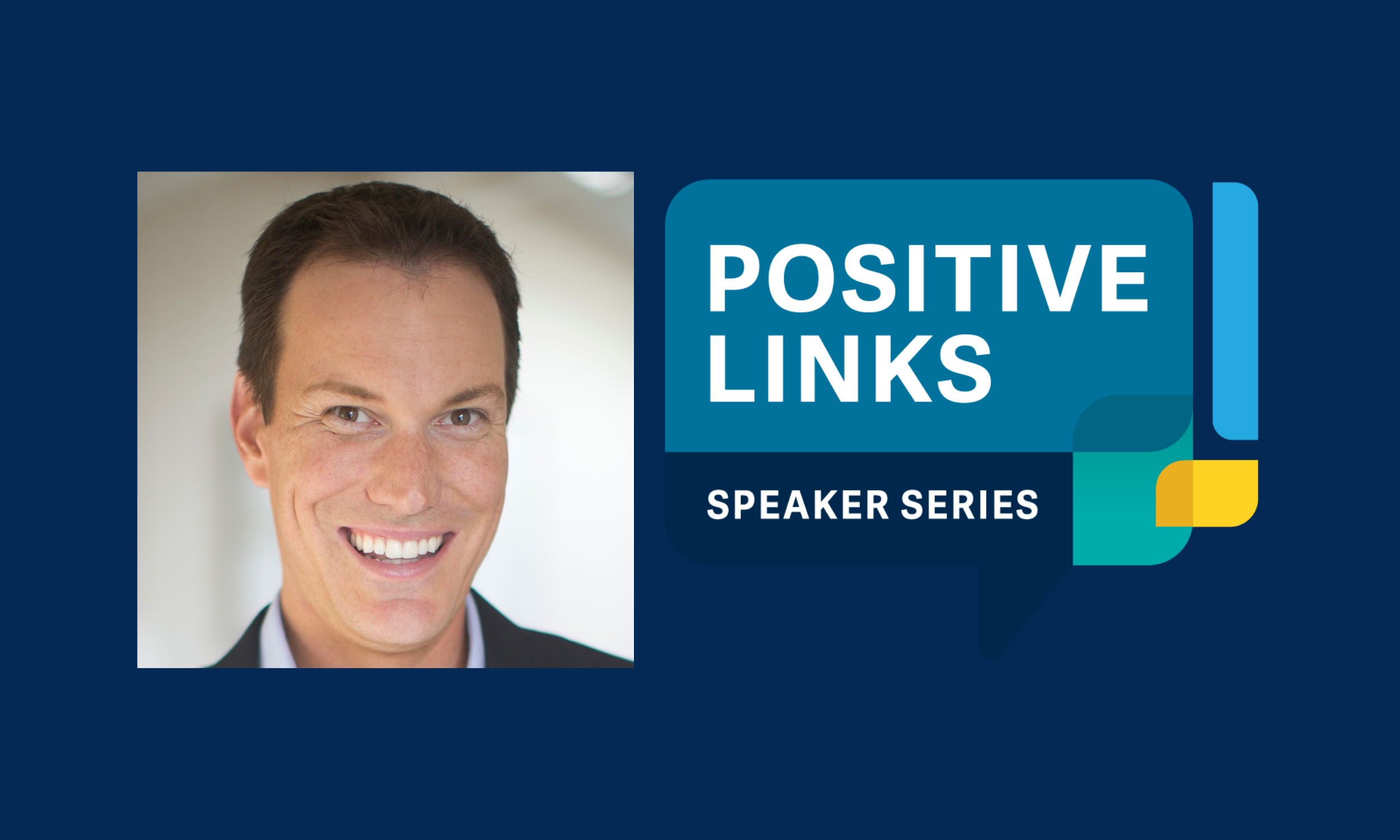
Positive Links - The Power of Beliefs: How Seven Core Beliefs Shape Performance, Well-Being, and Collective Thriving
This session explores a question at the center of Shawn Achor’s newest research: how much do the beliefs people hold about themselves, their work, and their world shape what happens next? Drawing on two decades of research across 51 countries — and work spanning Fortune 100 companies, NASA, the NFL, public school systems, and six battalions of Marines — Achor introduces a set of seven core beliefs he has found to be most consistently linked to performance, health, and well-being, ranging from the belief that one’s behavior matters to the belief that one’s work is meaningful. He situates these findings against what he calls the Great Drift — the concurrent rise of burnout, anxiety, loneliness, and depression — and argues that as technology has grown more powerful, beliefs have become more predictive, not less. You will leave with several research-tested strategies for shifting limiting beliefs in yourself and others, and a framework for understanding how belief change spreads through teams and organizations.
Shawn Achor is the New York Times bestselling author of The Happiness Advantage and Big Potential. Shawn graduated magna cum laude from Harvard and earned a master’s from Harvard Divinity School in Christian and Buddhist ethics. After spending 12 years at Harvard, Shawn traveled to 50 countries studying how to create an interconnected approach to potential and happiness. He has now worked with over a third of the Fortune 100 companies, and at places like NASA, the NFL, and the Pentagon. Shawn has battle-tested his research in high-challenge environments, from working with all the public schools in Flint, Michigan, to six battalions of Marines at Camp Pendleton, to government leaders at Camp David, to students in a shantytown in Soweto, South Africa, to hospitals in the wake of a mass shooting in Orlando and the Boston bombing. In every place, Shawn has found that optimism can be increased through mindset and behavioral change, and that by creating an interconnected approach to happiness and success, we shine brighter together. Shawn’s research made the cover of Harvard Business Review, his TED talk is one of the most popular of all time with over 20 million views, and his lecture airing on PBS has been seen by millions.
Hosted by Monica Worline, Faculty Director, Center for Positive Organizations
Register here for this free online event. Please note, this event has been standardized to the Eastern Time Zone.
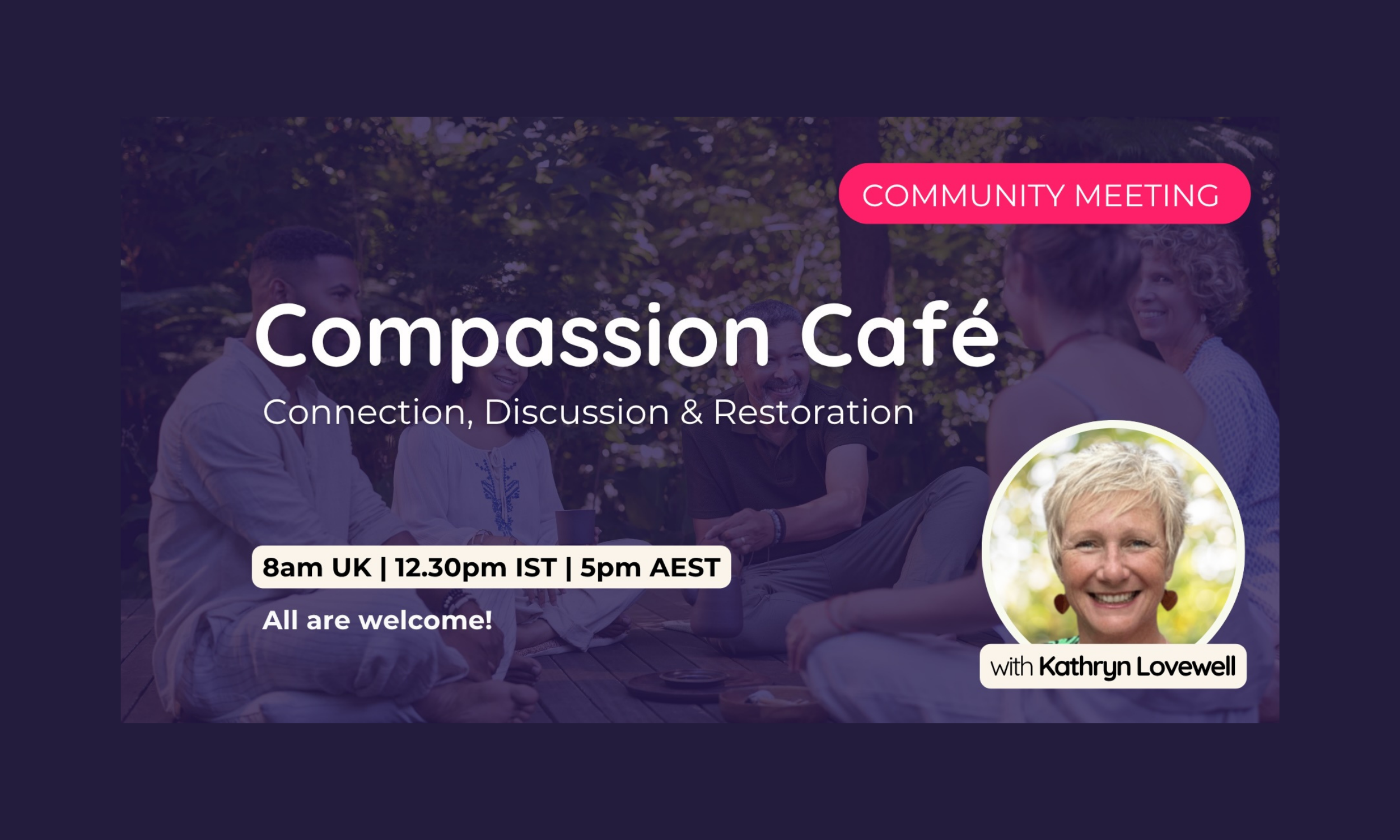
Compassion Café: Morning UK A Place for Connection, Discussion and Restoration
A Place for Connection, Discussion and Restoration with Kathryn Lovewell. Compassion Cafe is a fortnightly, informal meet-up for the whole, global GCC family to come together. In a warm and welcoming atmosphere, you’ll find connection with others, support in your compassion practice and ideas for developing it, wherever you are in your personal journey.
This is a free space to learn, share and simply connect. So if you’ve ever wondered ‘am I knowledgeable enough to take part?’ or ‘do I have enough experience?’, please know that the only requirement to attend these get-togethers is for you to show up! You don’t have to be a GCC member. And if you just want to listen, that’s totally fine too!
Each meet-up will include some of the following:
Prompts to encourage some personal reflections
Practical suggestions and advice for developing your compassion practice
Free space for those that want to share their thoughts and experiences
Optional small group spaces for sharing
Inspiration for putting compassion into action in your personal life, your community and the wider world
Register here for this free online event. Please note, this event has been standardized to the Eastern Time Zone.

Equanimity: Through the Lens of Love, Compassion, Psychology and Neuroscience with Margaret Cullen, MFT
Equanimity is a subtle, profound and often under-appreciated virtue across traditions and millenia. In this workshop, we will explore equanimity as an expression of love, a mitigating factor against compassion collapse, and a burgeoning focus of psychological and neuroscientific research.
Margaret Cullen, MFT is a licensed psychotherapist and a meditation practitioner with over 45 years experience. A pioneer in bringing contemplative practices into mainstream settings, she co-developed the Compassion Cultivation Training at Stanford University and the Mindfulness and Compassion Training for military spouses at the University of Miami. She was one of the first ten people to be certified in MBSR under the mentorship of Jon Kabat-Zinn and trained in MBCT with Zindel Segal. She is the founder of Compassion Corps and Mindfulness-Based Emotional Balance, on the Advisory Board of the Global Compassion Institute, a Mind and Life Fellow, and founding faculty member of the Compassion Institute. She has written extensively on mindfulness and her latest book is Quiet Strength: Find Peace, Feel Alive, and Love Boundlessly through the Power of Equanimity.
Learning Objectives:
At the conclusion of this session, participants will be able to:
Describe how equanimity is an expression of love.
Apply equanimity as a mitigating force against compassion collapse.
Differentiate equanimity from its near enemies.
Assess the burgeoning neuroscience on equanimity.
Register here for this free online event. Please note, this event has been standardized to the Eastern Time Zone.
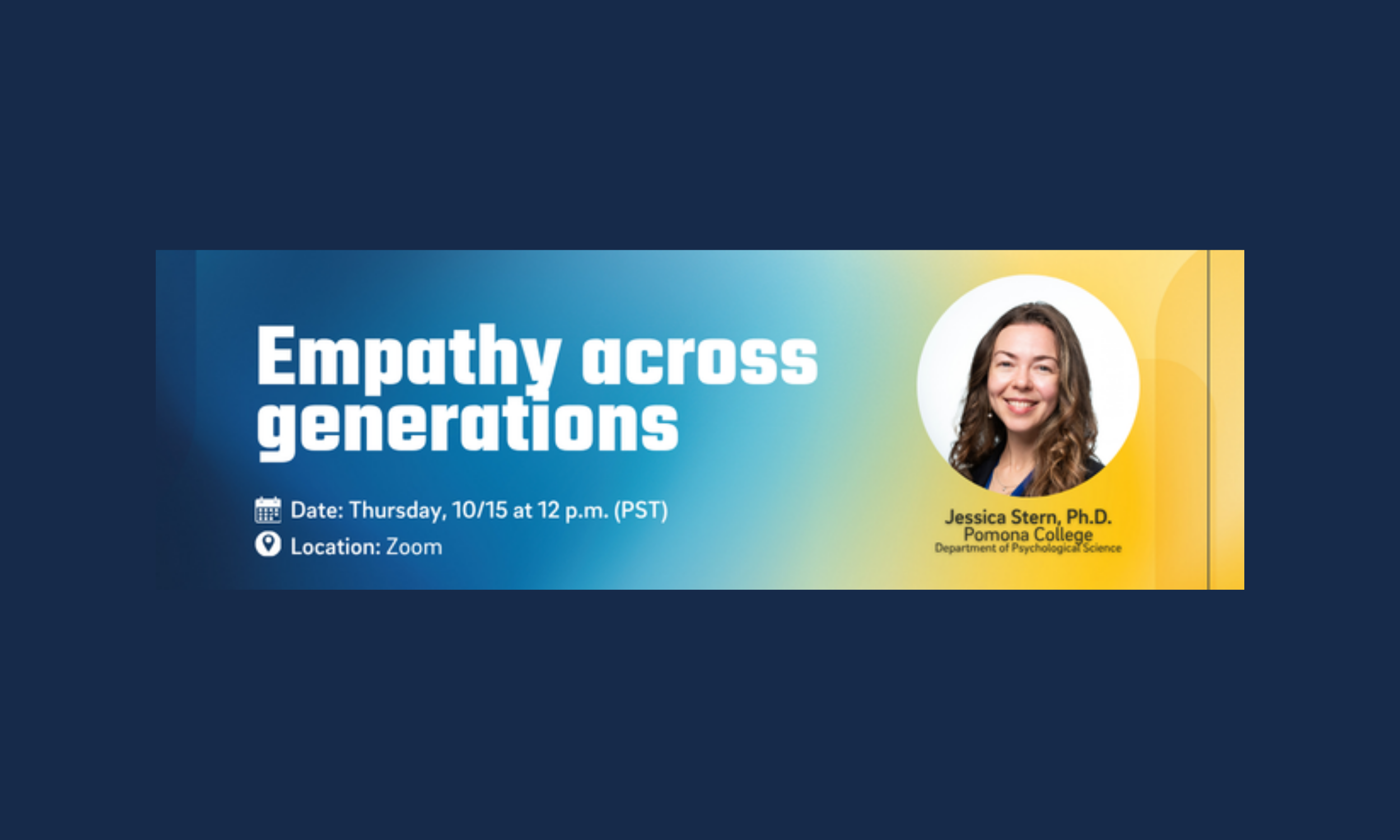
Empathy & Compassion Research - Speaker Series: Empathy Across Generations with Dr. Jessica Stern
Empathy across generations, Jessica Stern, Ph.D., Pomona College, Assistant Professor of Psychological Science
The roots of empathy begin in childhood; individual differences in empathy and prosocial behavior can be observed as early as the first years of life. Identifying the sources of these differences is critical for understanding and nurturing empathy across the life course. This presentation introduces a social-developmental model of empathy, proposing that first-hand experiences of receiving empathic care from parents (beyond socialization alone) lay the foundation for providing empathic care for others. I will present research from young children, adolescents, and adults demonstrating how patterns of empathy persist across time and generations, with a focus on attachment and neurobiological mechanisms. The presentation will explore potential applications and interventions, including leveraging adolescent friendships to support empathy during an especially sensitive window of development.
Learn about the latest empathy and compassion research findings from Sanford Institute-affiliated researchers.
UC San Diego’s Center for Research on Empathy and Compassion proudly presents the Empathy & Compassion Research Speaker Series for Fall 2026. This free virtual series highlights the impactful and groundbreaking research that Sanford Institute-affiliated faculty and researchers have played an integral role in. This series is designed for anyone with an interest in empathy and compassion in neurobiology and healthcare.
The hosting organization, T. Denny Sanford Institute of Empathy and Compassion, represents an unprecedented blending of two parallel themes: employing the unyielding rigor and tools of science to establish the neurological basis for empathy in the brain to identify the mechanisms that transform compassion from biology to behavior, and experimenting with and developing new ways to teach and instill empathy and compassion in clinicians currently practicing and in the teaching of future generations of health professionals.
Register here for this free online event. Please note, this event has been standardized to the Eastern Time Zone.

Microhabits: The Science of Habits So Small They Actually Stick
What if the key to lasting change isn’t doing more, but starting smaller?
Join UC Berkeley's Greater Good Science Center for a live conversation with sociologist and author Christine Carter and psychologist and author Eli Susman, PhD, on why our biggest plans so often fail and why the tiniest ones tend to succeed.
Christine and Eli will explore the science of habit formation: why repetition beats duration, why success (however small) builds the belief that change is possible, and how "micropractices"—behaviors so brief they take 30 seconds or less—can carve real, lasting neural pathways toward a calmer, happier life.
This conversation will cover:
Live micropractices to try together, in the moment
The behavioral science around how small practices compound into lasting change
Research-backed tools for building greater health, calm, and joy into your daily life
A live Q&A
Christine Carter, PhD, is one of the most credible voices in the science of human flourishing. A Harvard Medical School-trained Wellness and Lifestyle Coach, Senior Fellow at UC Berkeley’s Greater Good Science Center, and member of the American College of Lifestyle Medicine, Dr. Carter has spent over two decades translating research into practical tools that actually change lives.
Eli Susman, PhD is a UC Berkeley-trained psychologist, researcher, and author of Micropractice: A Science-Backed Approach for Calm, Clarity, and Joy in 30 Seconds or Less, forthcoming in 20 languages. His research has been featured by more than 100 media outlets worldwide, including CNN, BBC, and The New York Times, and was recognized by Greater Good Magazine as one of the “Top 10 Insights from the Science of a Meaningful Life” in 2024.
Join us in exploring how tiny, science-backed shifts can build lasting change in our health, happiness, and relationships, and try one in community with others!
Register here for this free online event. Please note, this event has been standardized to the Eastern Time Zone.
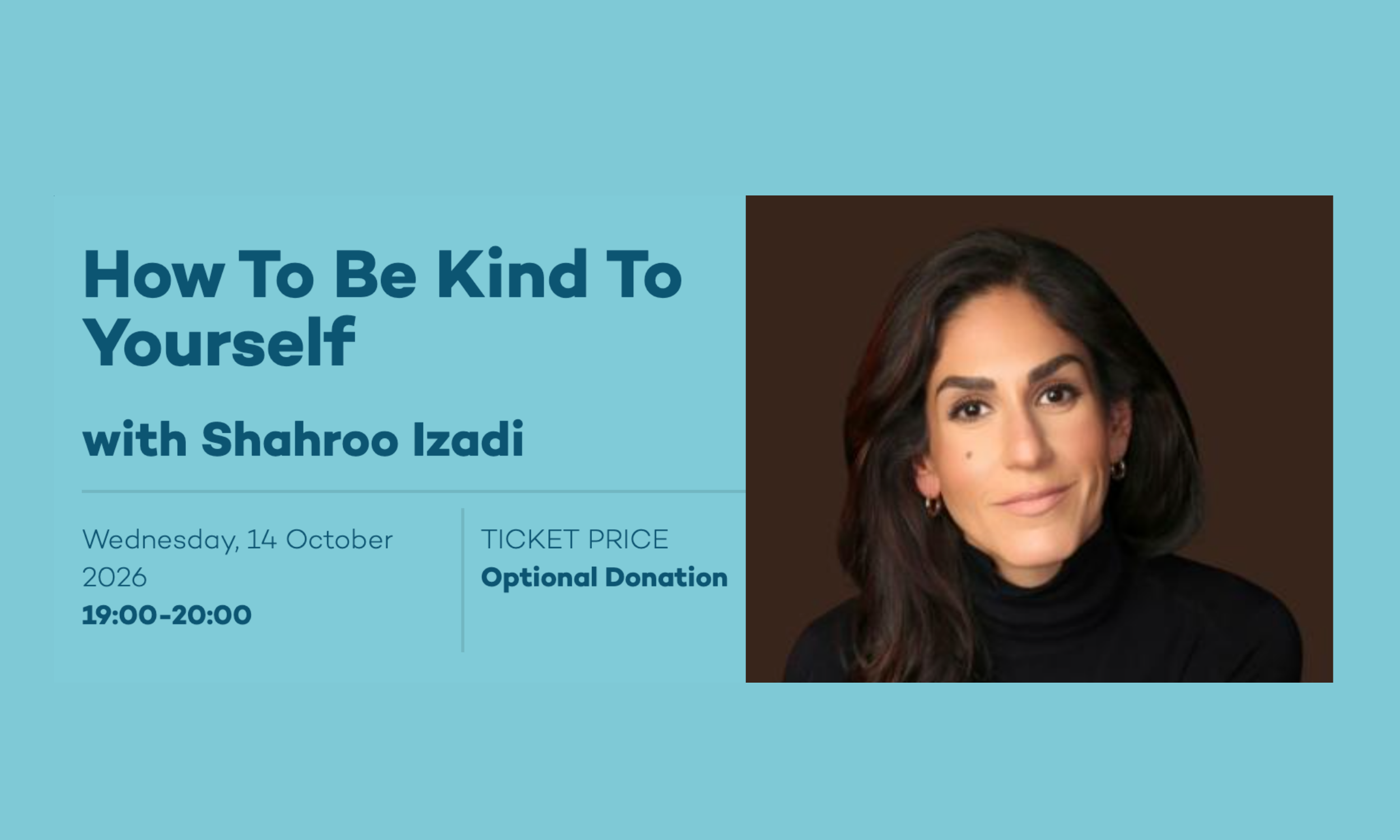
How To Be Kind To Yourself with Shahroo Izadi
Are you kinder to everyone else than you are to yourself?
Most of us assume the way to change is to be tough on ourselves - pushing harder and beating ourselves up when we fall short. But this usually backfires: harsh self-talk undermines us, while kindness is what keeps us going when life gets difficult.
At this special event, behavioural change specialist Shahroo Izadi will share the ideas behind her bestselling book The Kindness Method - exploring how to talk to ourselves more kindly and why we're usually more capable than we remember.
Shahroo will guide us through some of her favourite actions, including mapping out the things you like about yourself, borrowing the compassion you would offer someone you love and turning it on yourself and putting together your own personal toolkit for the moments that matter.
Whether you're trying to quieten a harsh inner critic, or simply build a kinder relationship with yourself, this event will leave you with practical tools you can start using straight away - and the reassurance that a slip is just a slip, not a failure.
Shahroo Izadi is a behavioural change specialist who began her career in the NHS before moving into private practice, working across the UK addiction treatment sector in clinical, community and prison settings. She has used her own methods personally too, losing eight stone and keeping it off using the same compassionate approach she teaches. She is the bestselling author of The Kindness Method and The Last Diet, both of which combine evidence-based techniques with warmth and lived experience.
Shahroo was named Thought Leader of the Year at the Baton Awards, House of Lords, and her work has featured in the BBC, Forbes, The Times and The Telegraph, and on podcasts including The Diary of a CEO. Alongside writing, Shahroo runs popular workshops and coaching programmes, and has delivered keynotes and bespoke programmes for organisations including Facebook, Amazon and Google.
Register here for this free online event. Please note, this event has been standardized to the Eastern Time Zone.
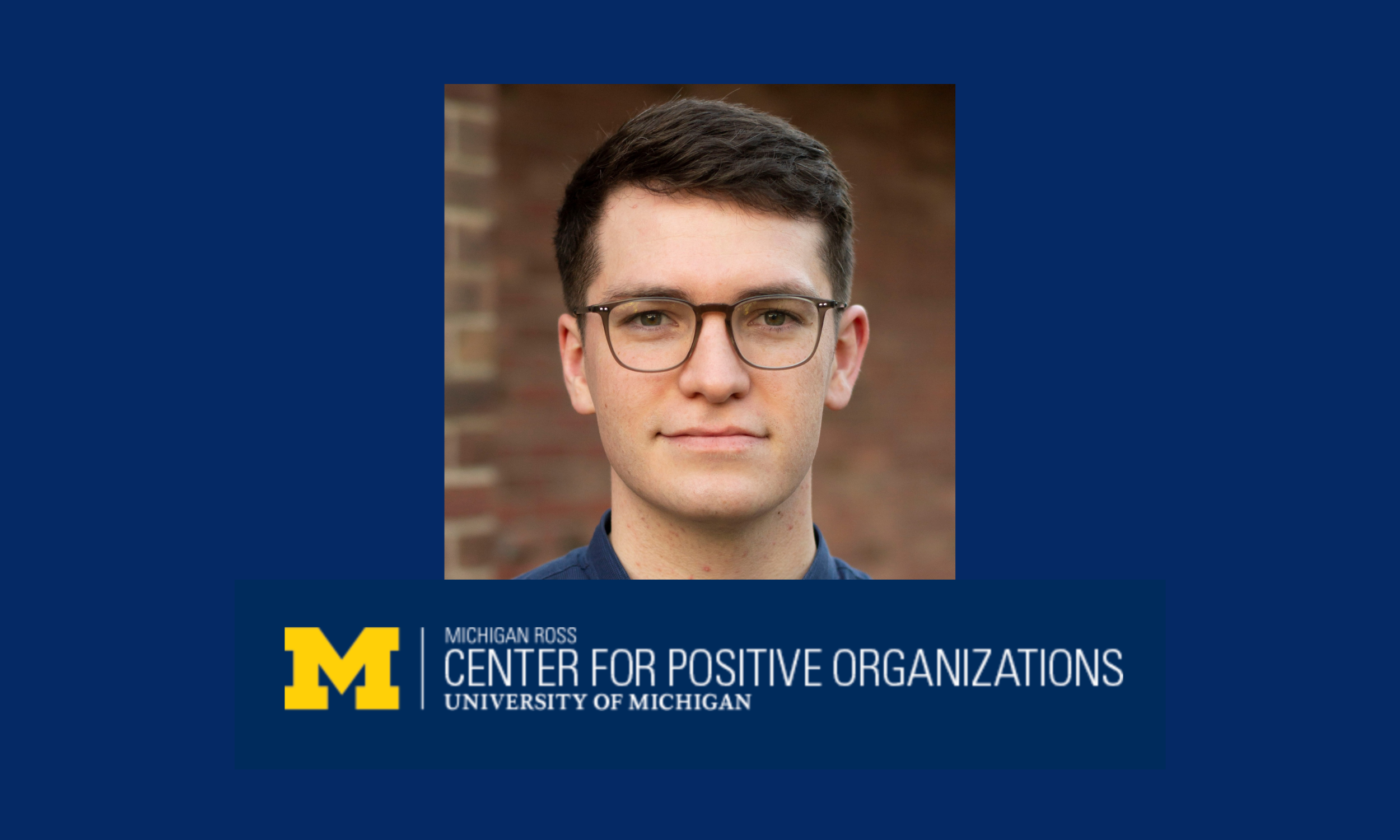
Adderley Positive Research Incubator: Culture and Physiology Shape the Link Between Emotion and Health (Copy)
Featured Scholar: Chayce Baldwin, University of Michigan
Emotion is intimately linked to health—an observation that permeates global discourse and policy initiatives alike. Yet, the research behind it overwhelmingly relies on narrow populations that underrepresent over 85% of the world. In the first part of this talk, I draw on data from more than 2 million people in over 150 countries to show that the emotion-health link, though fundamentally physiological, differs strikingly across cultures. I first present evidence that culture modulates the loneliness-health link, then extend this pattern to the emotion-health link more broadly. Next, I show that culture interacts with physiology at multiple levels, shaping the emotion-health link distinctly across short- and long-term timescales. In the second part of this talk, I explore how physiology and culture, as two major shapers of emotion, might be leveraged to regulate emotion more effectively, in more lasting ways, and in tune with the rhythms of daily life.
The Center for Positive Organizations Adderley Positive Research Incubators invite emerging scholars to share new work or work in progress related to the broad domain of Positive Organizational Scholarship, supported by a community dedicated to helping them foster early ideas, generate insights, and see new possibilities for their core ideas. Incubators are an exciting forum for the growth, celebration, and expansion of research ideas aimed at fostering our understanding of the science of thriving organizations.
Register here for this free online event. Please note, this event has been standardized to the Eastern Time Zone.
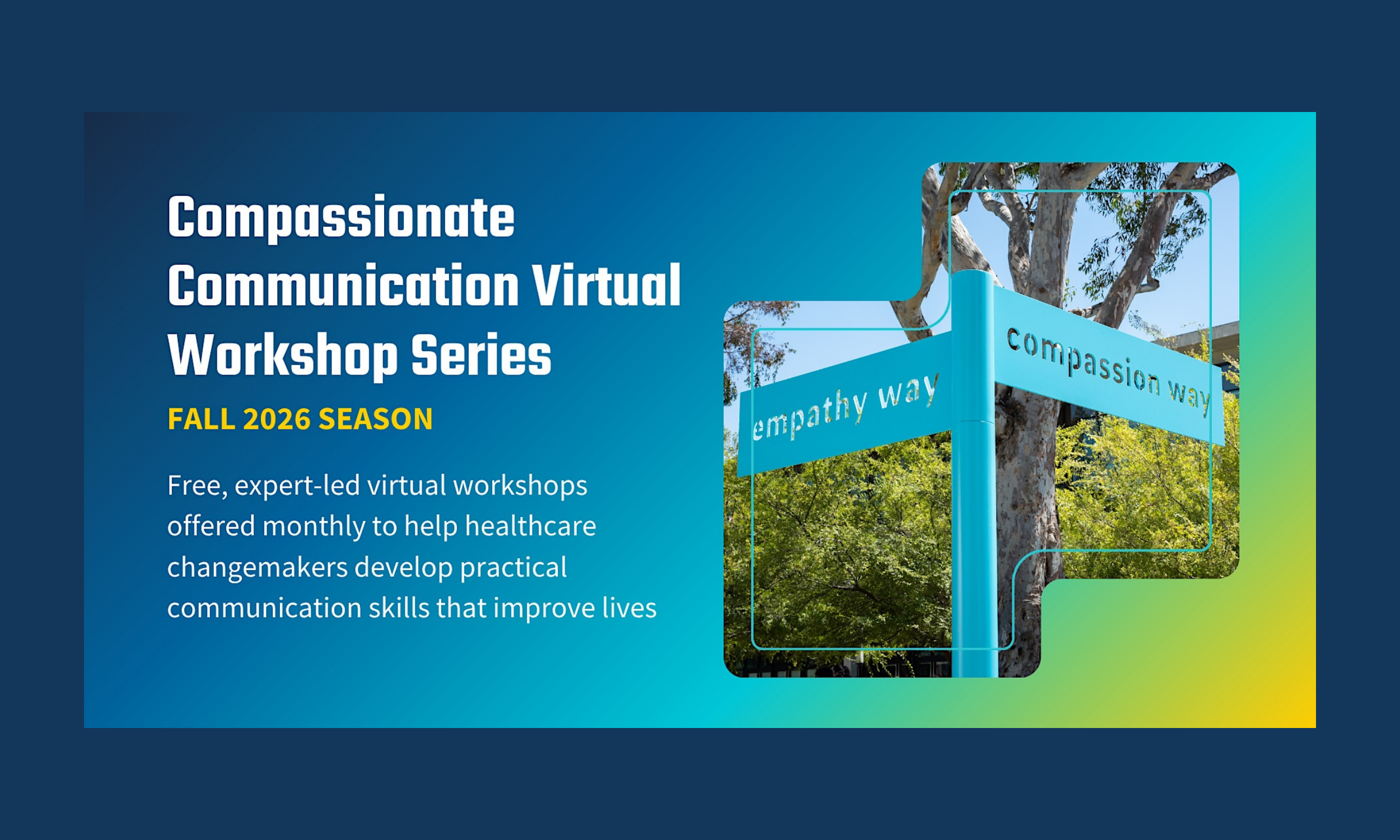
Compassionate Communication Virtual Workshop Series - Narrative Humility: Listening Beyond Assumptions
Communication shapes every interaction in healthcare. Build the skills to make each one count.
UC San Diego's Center for Compassionate Communication invites you to the Fall 2026 Compassionate Communication Virtual Workshop Series.
Designed for healthcare professionals, healthcare educators, medical students, and beyond, this free, interactive series equips participants with practical communication skills to strengthen relationships, navigate difficult conversations, and foster more compassionate, effective interactions with patients, colleagues, learners, and teams.
Every person we meet carries a story—but no matter how much we know, we can never fully know another person's experience. Narrative Humility is a practice of approaching others with curiosity rather than certainty. In this interactive webinar, participants will explore how stories shape perception, decision-making, and relationships while learning practical tools for reducing assumptions, navigating uncertainty, and building stronger human connection.
Register here for this free online event. Please note, this event has been standardized to the Eastern Time Zone.
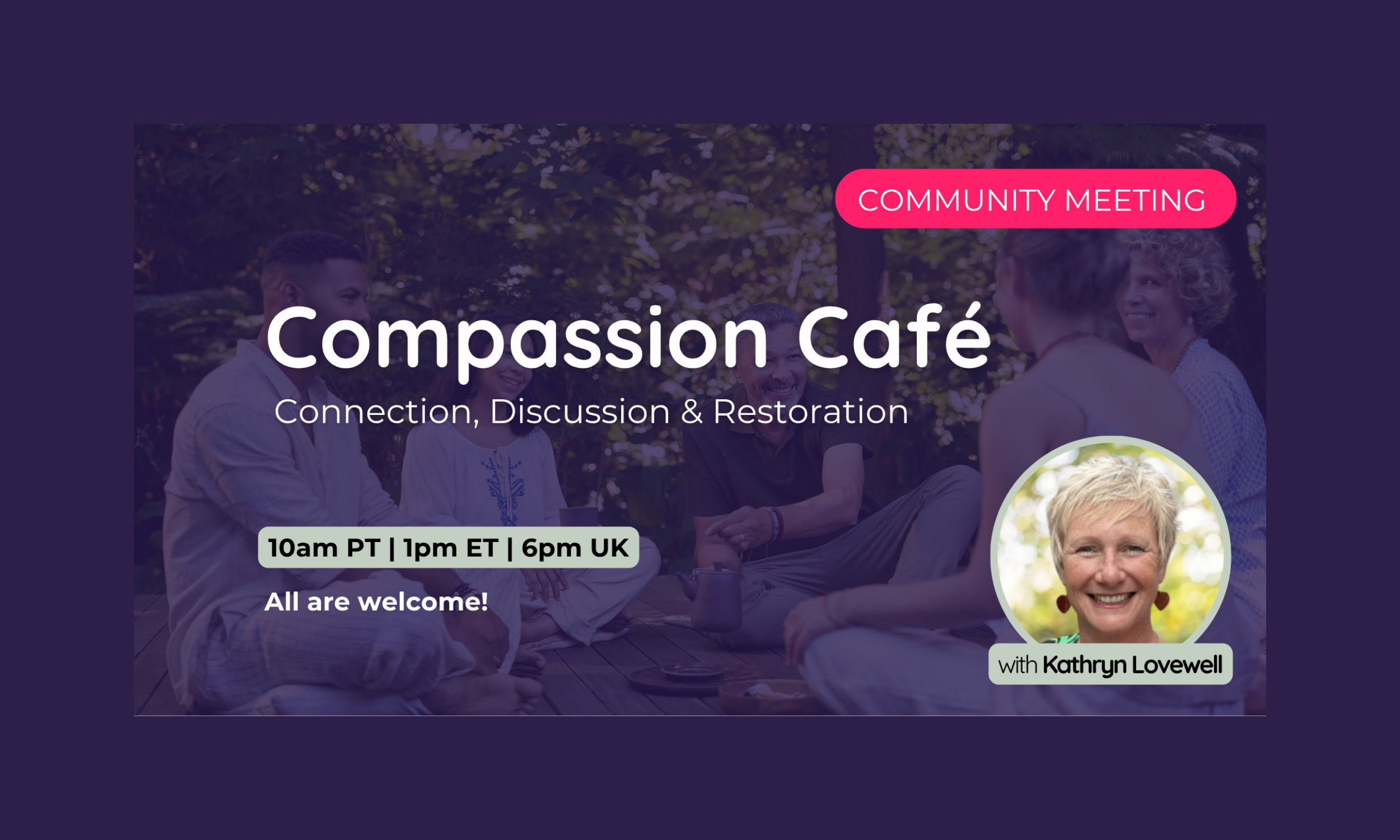
Compassion Café: A Place for Connection, Discussion and Restoration
Compassion Cafe is a fortnightly, informal online meet-up for the whole, global GCC family to come together. In a warm and welcoming atmosphere, you’ll find connection with others, support in your compassion practice and ideas for developing it, wherever you are in your practice.
Each gathering includes a mix of the following, depending on the session:
Personal reflection prompts to help you connect with your own compassion practice
Practical suggestions for developing compassion in your daily life
Open space for those who want to share their thoughts and experiences
Optional small group breakouts for deeper conversation
Inspiration for bringing compassion into your personal life, your community, and the wider world
Register here for this free online event. Please note, this event has been standardized to the Eastern Time Zone.
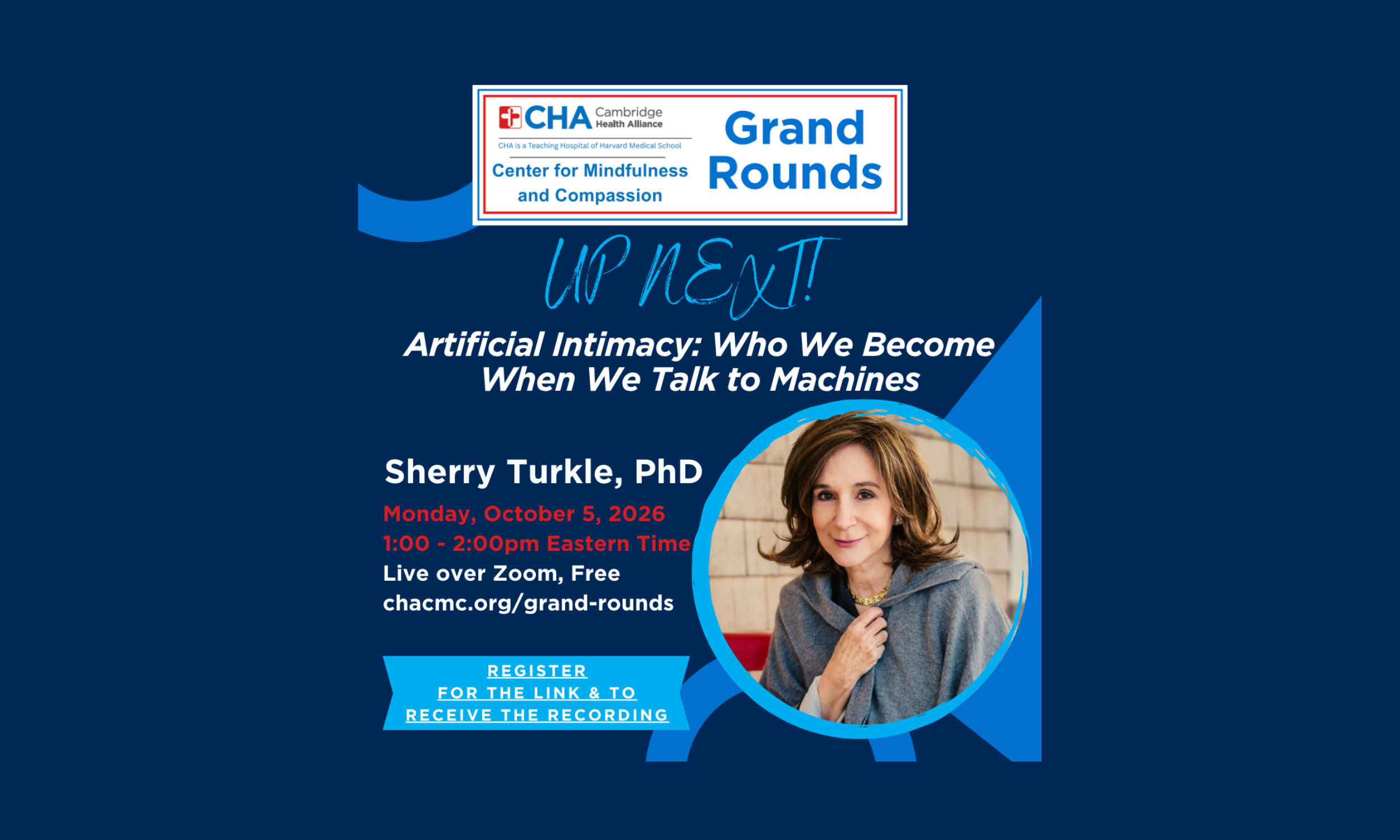
Artificial Intimacy: Who We Become When We Talk To Machines
Sherry Turkle’s lecture on Artificial Intimacy: Who We Become When We Talk To Machinesexamines the growing integration of human-like AI chatbots into social and emotional life. Drawing on research on human–computer relationships, Turkle explores how the use of AI systems as companions, confidants, and sources of emotional support may shape expectations of empathy, attachment, intimacy, and care. She introduces the concept of “artificial intimacy” to describe relationships in which technologies simulate relational capacities without possessing the reciprocal experience underlying human relationships. Turkle raises questions about how sustained engagement with these systems may influence interpersonal development, including the capacity to tolerate uncertainty, navigate conflict, and sustain reciprocal human connection.
Sherry Turkle is the Abby Rockefeller Mauzé Professor of the Social Studies of Science and Technology at MIT. She has done pathbreaking work in exploring the “subjective side” of our relationship with technology, especially computers. Her works include The Second Self, Life on the Screen, Alone Together, Reclaiming Conversation, and Simulation and Its Discontents. Her most recent book, is Artificial Intimacy, If social media came after our attention, chatbots come after our capacity for attachment. Turkle is a recipient of Rockefeller and Guggenheim awards, a
Harvard Centennial Award, and is a member of the American Academy of Arts and Sciences.
Learning Objectives:
At the conclusion of this session, participants will be able to:
1) Describe the developmental arc of artificial intimacy
2) Recognize the holding power of relational artificats
3) Discuss social media as a gateway drug for chatbots
Register here for this free online event. Please note, this event has been standardized to the Eastern Time Zone.
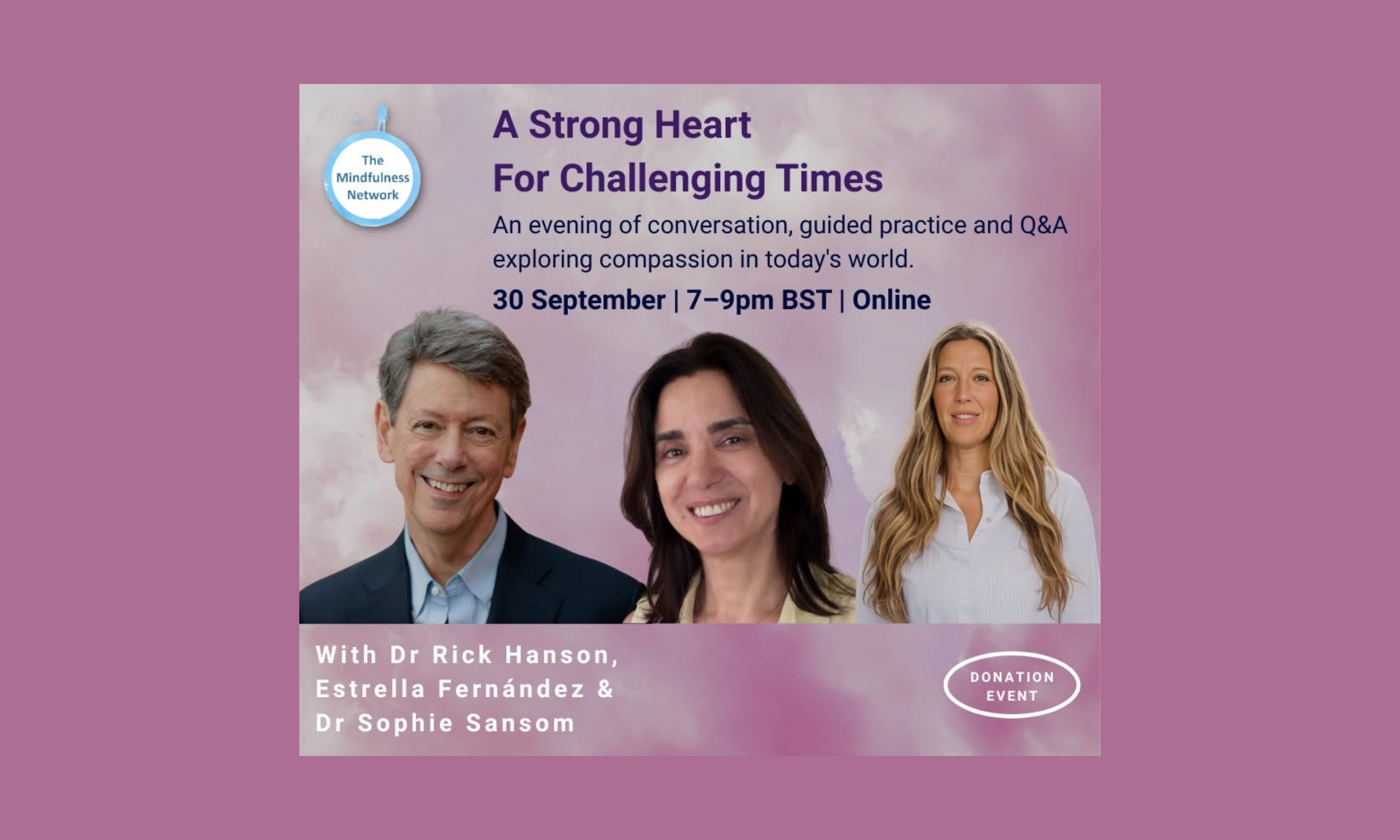
A Strong Heart for Challenging Times with Rick Hanson, Estrella Fernandez and Sophie Sansom
We are delighted to offer this donation event exploring themes of resilience, compassion and self-compassion in our lives during these times. The evening will be a mix of guided practice and discussion offered by our trio of guest speakers who represent three different aspects of the Mindfulness Network charity: our Trustees, our close partners at Bangor University and our wider Network.
Our guests are Rick Hanson PhD, the world-renowned psychologist who founded the Global Compassion Coalition, is a Senior Fellow of UC Berkeley’s Greater Good Science Center and a New York Times best-selling author; Estrella Fernandez, one of the Mindfulness Network's Trustees and founder of MBCT Spain; and Sophie Samson, co-director of the Centre for Mindfulness Research and Practice at Bangor University and Trustee Chair at BAMBA.
Register here for this free online event. Please note, this event has been standardized to the Eastern Time Zone.
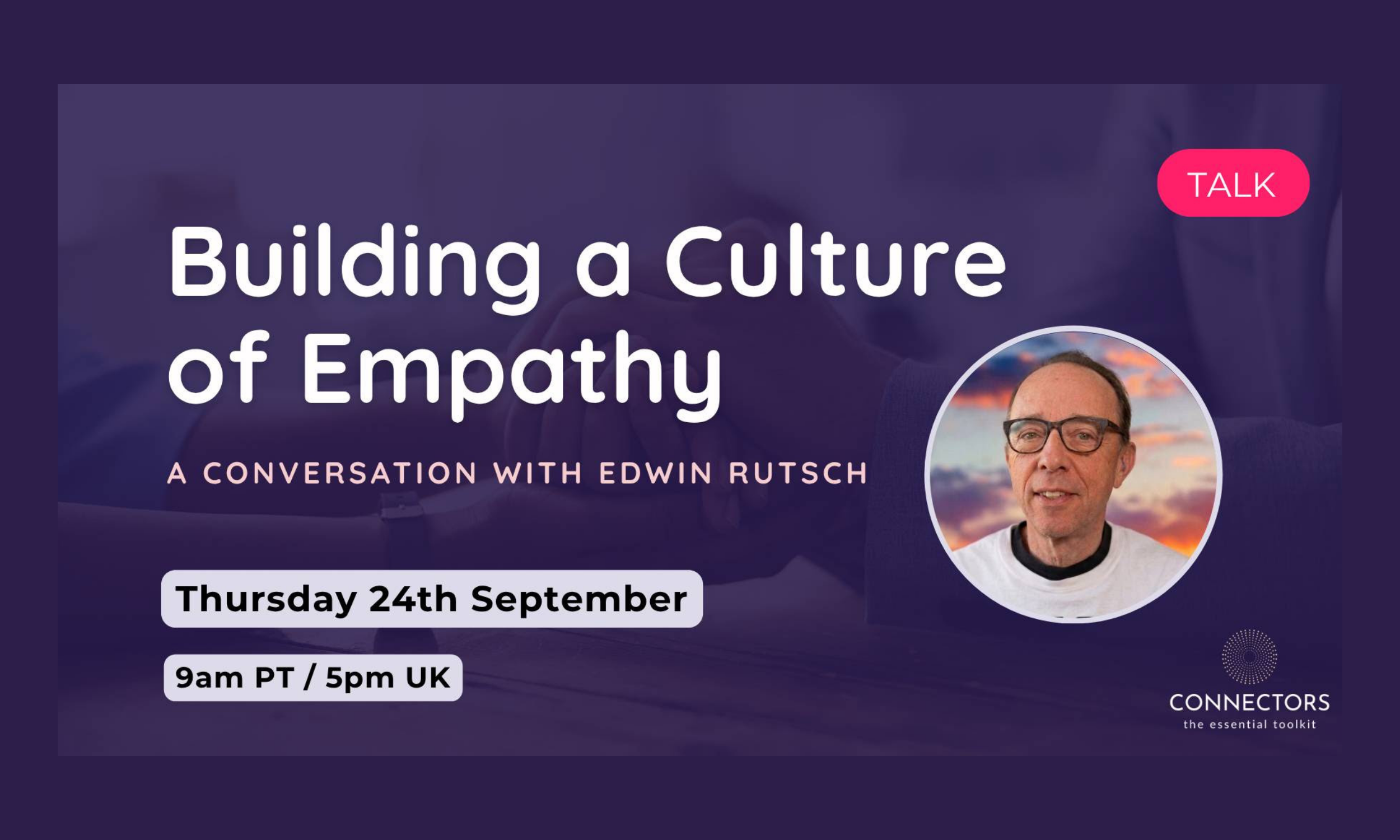
Building a Culture of Empathy: A Conversation with Edwin Rutsch
What happens when we think of empathy not only as an individual quality, but as something we can cultivate collectively? In this conversation, we’ll explore the science of empathy with Edwin Rutsch, founder of the Center for Building a Culture of Empathy.
We’ll look at what empathy is, what makes it difficult to practice, and what gets in the way of creating more empathic relationships and communities.
But this isn’t just about understanding empathy. Together, we’ll explore how we can put empathy into practice in our everyday lives, and how small, intentional actions can contribute to a more empathic culture around us.
We’ll consider questions such as:
What does science tell us about how empathy works?
What are some of the common challenges and misconceptions around empathy?
What prevents us from empathising with others, especially when we disagree?
How can we strengthen our own capacity for empathy?
What simple practices can help us bring more empathy into our relationships, communities and everyday interactions?
And how can individual acts of empathy contribute to a broader culture of care and understanding?
This is an invitation to move beyond empathy as an idea and explore it as a practice, one that each of us can cultivate and share with others.
Edwin Rutsch is the founding director of The Empathy Center and The Center for Building a Culture of Empathy, and creator of the Empathy Circle practice. For over 15 years, he has worked to build a culture of empathy through education, facilitator training, research and public initiatives. His work explores empathy across fields including psychology, neuroscience, education, conflict transformation, politics and community life, with a focus on practical ways to strengthen empathic connection. Edwin has interviewed hundreds of leading empathy experts, curated an extensive online resource on empathy, and hosted global Empathy Summits. He also founded the Empathy Tent, bringing structured active listening and conflict resolution into public spaces and civic dialogue to help bridge divides.
Register here for this free online event. Please note, this event has been standardized to the Eastern Time Zone.
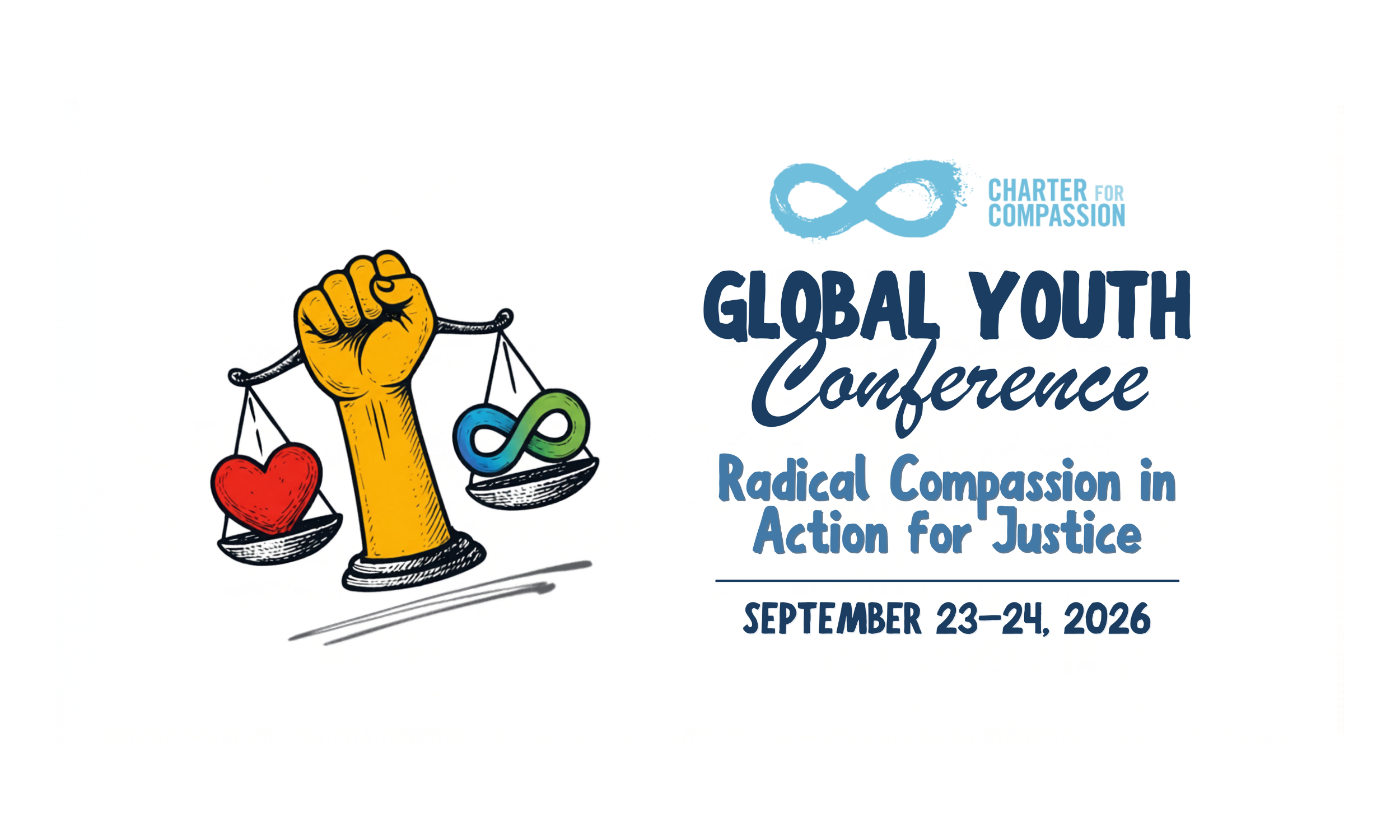
Charter for Compassion Global Youth Conference: Radical Compassion in Action for Justice
Welcome to the third edition of the Charter for Compassion Global Youth Conference. This year’s gathering deepens its focus on the intersection of compassion and justice. As we continue to bear witness to escalating conflict around the world, justice is no longer an abstract ideal, it is an urgent global imperative.
Across contexts, young people are witnessing and experiencing the consequences of unjust systems, while also organizing, resisting, and reimagining what a more equitable world can look like. Our collective humanity calls not only for awareness, but for courageous compassion, accountability, and sustained action.
Join us in exploring what compassionate action can look like in the pursuit of justice and systemic change.
Register here for this free online event. Please note, this event has been standardized to the Eastern Time Zone.