


How Compassion Becomes the New Normal
Compassion becomes embedded in organizations through the ways work gets done every day. Small changes to routines for hiring, meetings, communication, support, and project management can make it easier to notice and respond to people’s needs. Repeated over time, these small shifts help weave compassion into the fabric of the organization.

Where Does Change Begin?
What if the most important organizational change isn't waiting for approval from above? Organizations are continually recreated through everyday interactions. Compassionate leadership begins within our own sphere of influence, and that is precisely how cultures change as well.

Do We Really Have to Choose?
Pressure, fear, and chronic stress often accompany organizational success. They are not necessarily what produce it. Compassionate leadership pursues the same goals of excellence, efficiency, accountability, and courage by creating the conditions where people perform at their best and organizations thrive.

Compassionate Leadership in the Age of AI, Part 2: Building Organizations That Care
Compassion remains a uniquely human capacity. Yet AI can help leaders build organizations that are better equipped to cultivate compassion. By strengthening roles, routines, and networks, AI can help organizations notice suffering, foster connection, and create conditions where people and organizations thrive together.

Teams: The Ideal Place to Grow Compassionate Leadership
Teams are the ideal place to grow compassionate leadership. This is where many of our most important human interactions at work occur, and where our ability to shape culture is amplified by the human scale of teams. Within teams, leading with compassion and leading for compassion reinforce one another in tangible, everyday ways, making teams the ideal place for compassionate leadership to take shape in practice.
The Growing Global Ecosystem for Compassionate Leadership - Part 3
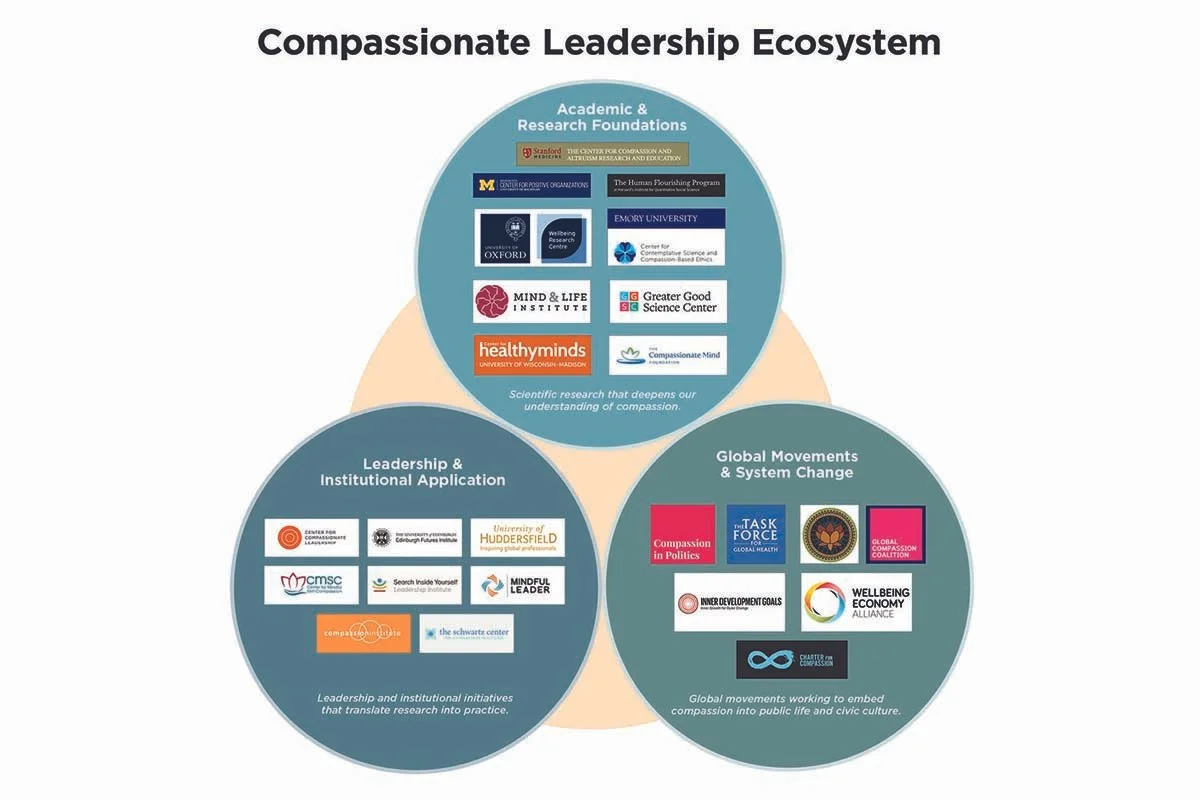
In this final article, we explore the dimension of the compassionate leadership ecosystem focused on systems change. These global movements and networks are working to embed compassion into public life – shaping culture, policy, and economic systems, and demonstrating how compassion can serve as an organizing principle for more humane and resilient societies.

The Growing Global Ecosystem for Compassionate Leadership – Part 2
In this second article in our series on the compassionate leadership ecosystem, we explore organizations that are translating compassion from research into practice. These organizations cultivate both individual and systemic capacities that sustain compassion and embed it into leadership, culture, and institutions to create flourishing workforces and thriving organizations.
The Growing Global Ecosystem for Compassionate Leadership – Part 1
Across the globe, a growing body of research is deepening our understanding of compassion and its role in human and organizational flourishing. In this first article in a three-part series, we highlight the academic institutions building the scientific foundation for compassionate leadership, demonstrating that compassion is measurable, trainable, actionable, and of benefit to all.

Compassionate Action: Moving from Resonance to Response
Compassion calls us forward into action. After noticing suffering, interpreting generously, and cultivating empathy, the final step is allowing care to take form in wise, courageous response. Compassionate action may not always fix what hurts, but it brings discernment and intention to what is possible. When we do this, we begin to reshape the systems around us. (This is the fourth in our four-part series on compassion.)

Making the Case for Compassionate Leadership
To win support for compassionate leadership, start with what matters to leaders: results. Pair research on performance, retention, and innovation with real stories and your own example. Over time, consistent, authentic compassion proves that caring for people and driving results go hand in hand.