
Notable Books of 2025
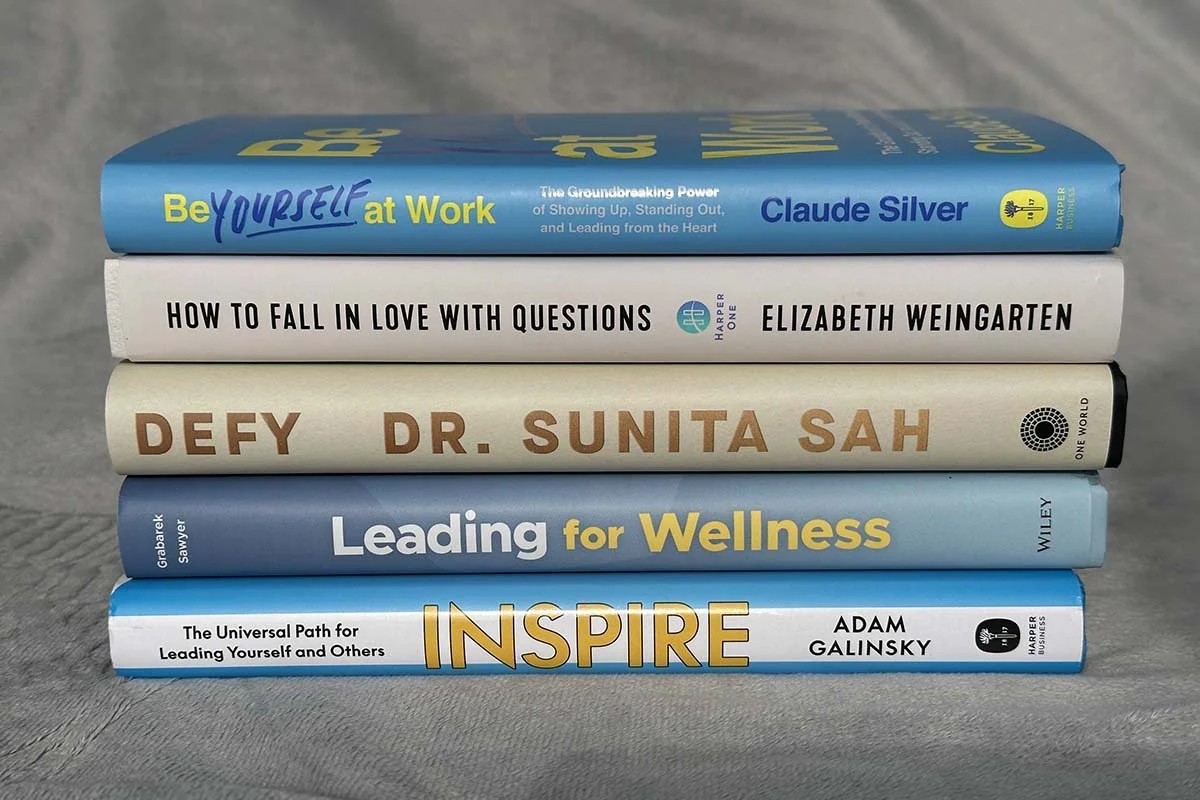
What a year this has been! 2025 is the year that AI became a primary focus in boardrooms across all sectors. It has also been a year of growing separation with gaps between groups stretching wider and wider. This year’s five recommended books express the role that compassionate leaders can play to respond to this rapidly evolving world.
In Defy by Dr. Sunita Sah, we are shown the value of acting in the world in alignment with our values when the world pushes us to act otherwise. Elizabeth Weingarten, in How to Fall in Love With Questions, shows us how we can move deeper at a time when technology may lull us into thinking instant answers are all we need. In Leading for Wellness by Patricia Grabarek and Katina Sawyer, we are shown how to use our uniquely human energy to uplift vitality in human connections. In Be Yourself at Work, Claude Silver gives us a path to cultivating work environments that invite everyone to show up authentically and wholeheartedly. Adam Galinsky, in Inspire, offers three leadership dimensions to focus on to become inspiring, not infuriating.
These books all touch on a number of timely themes:
Leading in the age of AI in ways that leverage our unique traits as humans,
Becoming intentional in choosing how you would like to lead,
Acting courageously and optimistically as you lead, and
Leading in authentic ways that align your actions with your vision and values.
Together, these books remind us that in a rapidly changing world, compassion is a strategic advantage rooted in our humanity, and essential for shaping workplaces where people and organizations thrive.
Defy: The Power of No in a World That Demands Yes by Dr. Sunita Sah
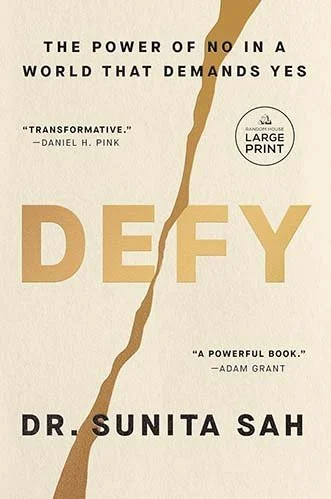
We are wired and trained to comply. For Dr. Sunita Sah, author of Defy: The Power of No in a World That Demands Yes, this message of compliance started at the very beginning. Her name literally means “good” in Sanskrit. But we often confuse compliance with the world’s expectations of us with being “good.” Just as compassion doesn’t equate to being nice, compliance doesn’t mean good. Sometimes it is our defiance that the world needs.
Sah defines defiance as acting in accordance with one’s own values when there is pressure to do otherwise. When we act aligned with our values, Sah suggests that we are offering a True Yes or a True No. We are being deeply authentic. Bringing our True Yeses and True Nos requires us to start with answering the question, “Who am I?” Authentic defiance (and authentic consent), like most compassionate leadership skills, starts from the inside out.
Defy shows the roots of our bias to comply, both from nature and from nurture, and how this bias plays out in many real-life situations. As a leading researcher, she has developed some of the most powerful evidence explaining why we say yes when our heart and gut tell us to say no, including “insinuation anxiety,” the fear that speaking up will suggest we assume ill intent on the part of another, or in other words, that we will hurt their feelings.
For those seeking clear frameworks for understanding defiance, Defy clearly delineates the five stages of defiance: inner tension, acknowledgment to self, escalation to others, threat of non-compliance, and finally defiance. This path shows that there are many ways to bring about change before we have to act defiantly.
In a world with rising pressure to conform, Defy offers a path to principled courage and shows that saying “no” with integrity can be the most compassionate act of all.
Be Yourself at Work: The Groundbreaking Power of Showing Up, Standing Out, and Leading from the Heart by Claude Silver
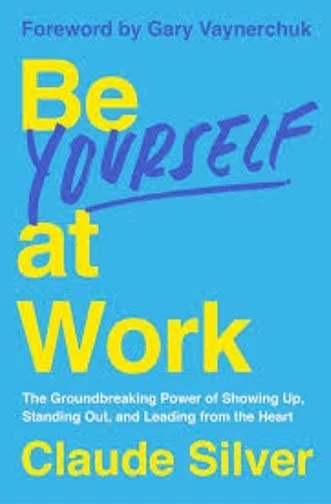
What does wellness at work look like? Environments where people can show up wholeheartedly. How to create such cultural environments is what Claude Silver skillfully delivers in Be Yourself at Work, a timely and deeply human guide to leadership in our emotionally complex world. Silver grounds her framework on three emotional pillars: Emotional Optimism, leading with hope and possibility; Emotional Bravery, acting with integrity even when fear or doubt is present; and Emotional Efficiency, bringing clarity, directness, and momentum to the work at hand.
This begins with leaders who intentionally cultivate their own self-awareness. Without it, we drift into pleasing others, using others, and draining the energy of those around us. With it, we build resilience, deepen relationships, and generate trust, all of which are central to compassionate leadership.
Silver reminds us that the true exhaustion of modern work comes not from tasks, but from navigating work’s often invisible emotional maze. Leaders who embrace humanity rather than armoring up create cultures where emotional honesty creates human connection and becomes a source of strength.
As we race to determine how we can be the fastest to implement technology, leaders may miss a principle at the heart of Be Yourself at Work: Our humanity is our greatest asset. Be Yourself at Work is a generous, practical invitation to lead with heart and to create workplaces where people can thrive because they are free to be themselves.
How to Fall in Love With Questions: A New Way to Thrive in Times of Uncertainty by Elizabeth Weingarten

Humans crave answers and dislike uncertainty. With the ubiquitous presence of AI, we no longer have to wait for answers. They are available in the palm of our hand. What does that say about our human ability to be curious, to inquire, and to discover? How to Fall in Love With Questions: A New Way to Thrive in Times of Uncertainty has arrived just in time.
In the midst of uncertainty, we can either shrink toward the narrow field of what we know, or use the questions that arise amid uncertainty as a tool to launch us into deeper knowing. Compassionate leaders understand the importance of staying focused on the learning that emerges from our work process, not just on the desired outcomes. How to Fall in Love With Questions helps us do just that.
The book title springs from a quote from Rainier Maria Rilke, “live the questions.” This is one of those dangerous quotes that people offer, without intending irony, as an answer to someone’s dilemma. How to Fall in Love With Questions offers “live the questions” as an invitation to depth.
Yes, How to Fall in Love With Questions offers answers. The answers, however, don’t come from the book alone. They start in our hearts.
Leading for Wellness: How to Create a Team Culture Where Everyone Thrives by Patricia Grabarek and Katina Sawyer
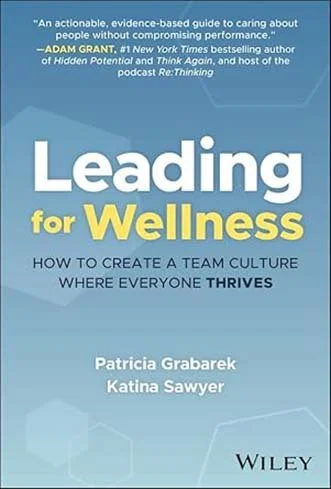
The case for wellness is the case for compassionate leadership. Wellness isn’t a perk. It is a core strategy that recognizes the humanity of employees and teams first, leading to healthier, more committed, and more creative employees. And this leads to more successful organizations.
Leading for Wellness: How to Create a Team Culture Where Everyone Thrives by Patricia Grabarek and Katina Sawyer is a practical, evidence-based guide to creating workplaces where people genuinely thrive.
The authors distinguish between two leadership orientations: “Generators” and “Extinguishers.” The labels say it all. The former uplift vitality, model healthy boundaries, cultivate trust, and create conditions in which people feel safe, supported, and valued. The latter suck energy through inauthenticity, rigidity, or disregard for wellbeing.
Generators are flexible: They recognize that there is more than one way to get things done. They engage in employee-centric practices that recognize the inherent worth of every individual.
Compassionate leaders set the emotional tone, and Leading for Wellness encourages cultivating a grounded, contagious positivity that supports wellbeing without glossing over real challenges. The book offers a practical relational process, SWIFT, that helps leaders build high-quality connections, leading to deeper trust, stronger psychological safety, and a healthier team. All of this leads to greater wellbeing.
Employees do not want superheroes. They want leaders who are real. Authenticity and vulnerability require self-knowledge and courage, and also build trust, predictability, and psychological safety.
Leading for Wellness is an essential read for leaders committed to creating humane systems. It reminds us that when we lead with compassion, we generate the conditions in which everyone can thrive.
Inspire: The Universal Path for Leading Yourself and Others by Adam Galinsky
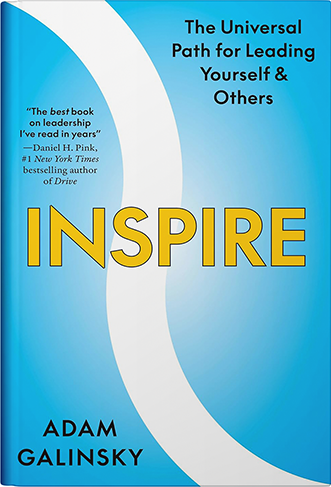
Good bosses. Bad bosses. We’ve seen them both, and everything in between. Adam Galinsky, in Inspire: The Universal Path for Leading Yourself and Others, lays out a straightforward three-dimension framework for what makes some leaders inspiring and others infuriating. These three characteristics, visionary, exemplar, and mentor, are all traits that we can develop, and Galinsky shows us how.
Each of Galinsky’s three inspirational characteristics address a fundamental human need. Visionary leaders address our need for meaning and purpose and do so by offering realistic and optimistic visions of what could be. Exemplars embody their values with courage and authenticity, and in so doing, help fulfill their followers need for protection and passion. Mentors empower and challenge their colleagues, helping them to be the best they can be. This aligns with our need for support and to be valued.
Leader intention is very important, as leaders are often unaware of the degree that their behavior impacts their teams. Galinsky labels this the “leader amplification effect,” which is that positive and negative feedback are amplified well beyond how they would land if coming from an ordinary individual. This creates a responsibility for intentional leadership.
Inspirational leadership begins with reflective practice, which lies at the heart of consistent growth. Every action, successful or not, can be leveraged into learning and growth. Galinsky uses an analogy familiar to compassionate systems leaders: architecture. Inspiring leaders intentionally design channels of connection, communication, and energy flow that allow people to thrive.
The choice is yours: Inspire or infuriate? Galinsky reminds us that inspiration is a daily practice and a choice that leaders can make with every interaction.
And one more special book – We can’t wait for the English version!
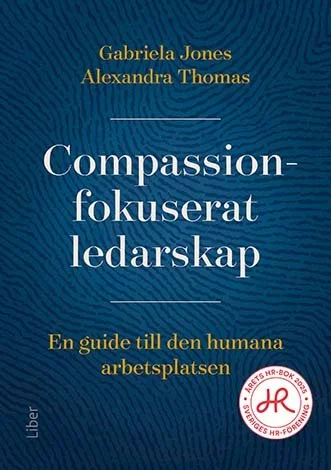
Compassionfokuserat ledarskap – boken (Compassion-Focused Leadership – The Book) by Gabriela Jones and Alexandra Thomas
Awarded the 2025 HR Book of the Year by the Swedish HR Association, Compassionfokuserat ledarskap stands as an inspiring contribution to the growing global movement toward more humane and values-aligned workplaces. A must-read for Swedish-speaking leaders, this landmark book brings compassion into the center of organizational life.
Accredited Compassionate Leadership Teacher Gabriela Jones and Compassionate Leadership Certification Training alum Alexandra Thomas draw on their deep experience and training to offer research-informed guidance and practical tools for cultivating compassionate leadership in action.
To never miss a blog post, sign up for our newsletter.
Hundreds of leaders from around the world have taken our Compassionate Leadership Certification Training programs over the last few years, bringing the lessons they learn back into their own organizations and lives.
Our Compassionate Leadership Certification Training will build your compassion from the inside out and connect you with a powerful global peer community for ongoing growth, inspiration, and support. It also serves as a prerequisite for our 2026 Compassionate Leadership Teacher Training Professional Certification.