
Compassion Is Good Business
There is a common myth about compassion in business. While it may make us better colleagues and more humane leaders, when performance is on the line, other considerations take precedence. Businesses have targets to meet and competitors to outperform. Compassion can seem secondary to the serious work of producing results.
Financial services is an especially interesting sector in which to examine that assumption. Few industries are more explicitly organized around performance, and few have greater influence over the direction of our economy, society, and planet.
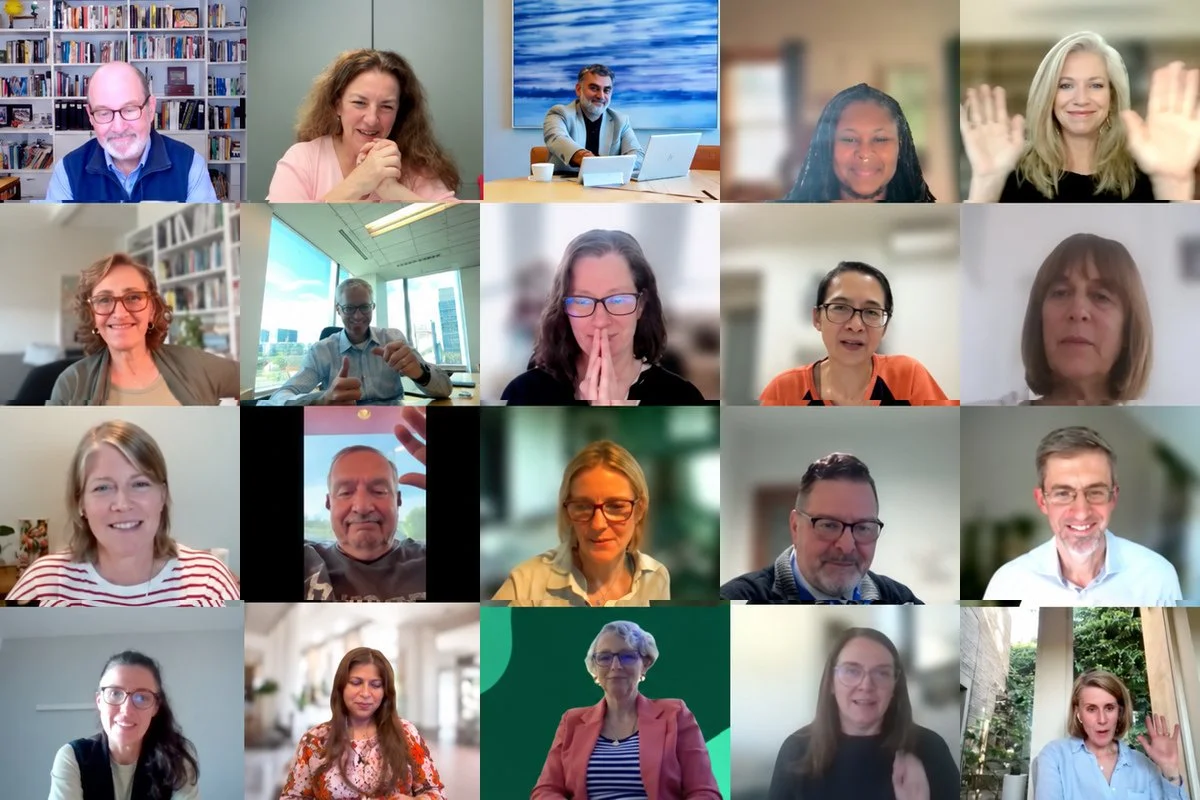
At a recent Global Compassion Community Gathering, co-hosted by the Center for Compassionate Leadership and the University of Edinburgh’s Compassion in Financial Services Hub, we explored this question with Bill Mansfield of Lloyds Bank North America and Omar Shaikh of the Global Ethical Finance Initiative, along with Professor Liz Grant of the University of Edinburgh, and Monica Worline, Center for Positive Organizations at the University of Michigan. What emerged was a view of compassion as deeply connected to the capacity of people, businesses, and economies to thrive.
The Human Conditions of High Performance
Bill Mansfield approached compassion through his experience leading in the highly competitive world of finance. He was clear that compassion does not mean lowering expectations, and described it as part of creating what he calls a “winning culture.”
In Bill's experience, when people feel cared for by their organization, they are more likely to be engaged and loyal. Their willingness to contribute and remain committed to the organization becomes part of its ability to succeed.
This is why Bill described compassion in financial services simply as “good business.” The idea that compassion somehow works against business performance misunderstands where sustained performance comes from.
“When the Client Wins, We Win”
Bill extends the same thinking to clients. He described the principle he shares with his people in remarkably simple terms: “When the client wins, we win.” Beginning with the experience of the customer, one can ask what a good outcome looks like for clients. Helping create that outcome strengthens the relationship on which the business itself depends.
This is at the heart of compassionate leadership. We seek to understand another person's circumstances and determine what wise action asks of us. In business, that orientation can become a source of value creation. The success of the client contributes to the success of the company serving them.
Finance Shapes the World We Live In
Omar Shaikh placed the conversation within the context of a global change that has been unfolding in finance since the global financial crisis of 2008. The growth of ethical, sustainable, and responsible finance reflects a widening understanding of what financial decisions need to take into account. One challenge, he observed, is that conventional measures can leave significant consequences outside the balance sheet. A decision can be financially profitable while creating costs elsewhere that the financial statements never capture.
Liz Grant brought an additional global perspective to the conversation. Along with leading the Compassion in Financial Services Hub, she is a professor of global health and planetary health. From that vantage point, she sees human flourishing, planetary health, and finance as deeply intertwined. How capital moves through an economy shapes the conditions in which people and the planet flourish.
That gives financial services extraordinary leverage. Finance does more than respond to the economy; it helps determine what gets built and supported. Liz observed that an industry capable of contributing to harm also has enormous capacity to improve wellbeing and help change the direction in which our systems develop.
Compassionate leadership offers a way of thinking about how that leverage is used. Liz asked what might happen if we “designed compassionately together.” Compassion can help us notice who may be made vulnerable by a financial product or decision and consider those consequences while there is still time to shape the outcome.
Expanding the Horizon
Sustainability as a theme arose frequently throughout the conversation. Omar asked us to consider costs and consequences that may not appear in today's financial statements. Bill spoke about building businesses capable of surviving economic cycles and questioned the assumption that business success requires someone else to lose. He captured the limits of that thinking in a memorable observation: “If you're the winner that takes all, there's nobody left to take it from.”
Compassion naturally lengthens our field of view. We become more attentive to how today's choices shape the relationships and conditions that will drive tomorrow's success. A healthy business needs an environment around it capable of remaining healthy too. Seen across a longer horizon, compassion becomes deeply practical. It helps leaders consider what their decisions are setting in motion and whether the success they are creating can endure.
Making It Easier for Compassion to Flow
Perhaps the most hopeful idea Liz offered was that we may already have more compassion than our institutions reveal. The problem is not a lack of compassionate people, but systems that can inhibit compassion’s expression. People may care about one another and the planet while working within structures that make it difficult for that care to influence decisions.
Monica Worline connected this idea to the work of the Center for Positive Organizations, describing an approach of “starting where we’re strong and designing from a place of compassion together.” Rather than beginning only with what is broken, leaders can notice where compassion, connection, and human capability are already present and create conditions that allow those strengths to spread.
The opportunity is especially consequential in finance because financial institutions have such reach. Designing systems that allow compassion to flow can influence the organizations receiving capital and the lives affected by their decisions. Compassion becomes part of how the system functions well.
What Kind of Success Are We Building?
In a world of accelerating change and increasing pressures, compassion helps leaders see more clearly the human relationships and systemic consequences shaped by their decisions. That wider field of view supports the kind of performance that can be sustained over time.
Financial services plays a particularly important role because it reaches so deeply into the world we share. Decisions about where money flows eventually become decisions about what grows, what becomes possible, and whose lives are affected.
Compassion is sometimes treated as secondary to the serious work of producing results. The experience and perspectives shared in this conversation show that compassion strengthens the work of building organizations that perform, people who flourish, and systems capable of sustaining both.